
The rapid expansion of high-performance computing (HPC) services, such as artificial intelligence (AI) and machine learning applications, especially after Covid, has significantly increased data consumption worldwide. Simultaneously, a sharp rise in energy demand and consistent calls for decarbonization are outpacing the capabilities of traditional utilities. Utilities and municipalities have singled out data centers for their electricity consumption and need to address how to minimize their footprint.
These factors inevitably drive the onus for solutions to operators and their partners: How can data centers plan their transition towards grid independence while maintaining operational efficiency and reducing their carbon footprint? The "bring your own power" (BYOP) solution is one of the strategies for achieving utility grid independence, which will be further discussed in the succeeding sections.
Disruptors and challenges in the data center industry
The data center industry faces two significant disruptions: decarbonization and increased AI compute demand. Enterprises have been taking steps to reduce carbon emissions even before Covid, with discussions revolving around utilization and chunk-sized deployments.
More recently, discussions have significantly changed: The rise of AI, large language model programs (LLM), and other applications has increased energy demand. Rack densities are climbing steadily, reaching 50 kilowatts (kW) and higher. Amid these, utilities are struggling to keep up with the demand, leading to power outages and energy instability in various parts of the world.
In recent months, data center operators have faced the challenge of meeting requirements of AI-driven services despite grid instability and reducing carbon emissions. And with Nvidia announcing the release of their new GPU series models designed to support AI applications with higher capabilities, rack density and energy demand are expected to further increase. Considering this, the BYOP strategy emerges as a reliable solution for grid independence, reliability, and reduced carbon emissions.
Reducing your vulnerability to utility outages
The BYOP approach uses distributed energy resources (DERs), like uninterruptible power supplies (UPS), battery energy storage systems (BESS), and fuel cells, to create an always-on microgrid, enabling a constant power supply. A microgrid implementing a BYOP strategy can either be connected to a larger grid to reduce utility outage risks or stand independently when necessary. By utilizing alternative energy sources, such as solar and wind power, you can minimize or eliminate Scope 1 and Scope 2 emissions (burn, buy, and everything else). This strategy allows reliable power despite grid instability, with DERs supporting energy generation, storage, and grid services.
Delivering seamless power continuity
The BYOP strategy can provide consistent power delivery. Aside from delivering load protection and maintaining power quality, the UPS also serves as a power center that manages energy.
With its grid-interactive capabilities, the UPS can support frequency regulation and demand management via charging and discharging the battery. This means that the UPS adjusts its energy output to maintain the stability of the power grid. It also reduces energy consumption during periods of high demand to alleviate strain on the grid and lower energy costs. It can support operations across a range of conditions, not only during power fluctuations or outages.
Meanwhile, the BESS provides a reliable, high-availability environment with extended backup time. It can store excess energy from alternative sources or the utility grid that can be used during peak demand periods. BESS can also support grid balancing and independent grids.
Reducing generator starts
Energy storage could either be at the UPS level in the form of a longer battery run or at the utility level in the form of a BESS. Once incorporated into the generator bus, the BESS can provide power for an extended period when the utility fails. The UPS switches to BESS instead of turning to the diesel generator for backup power.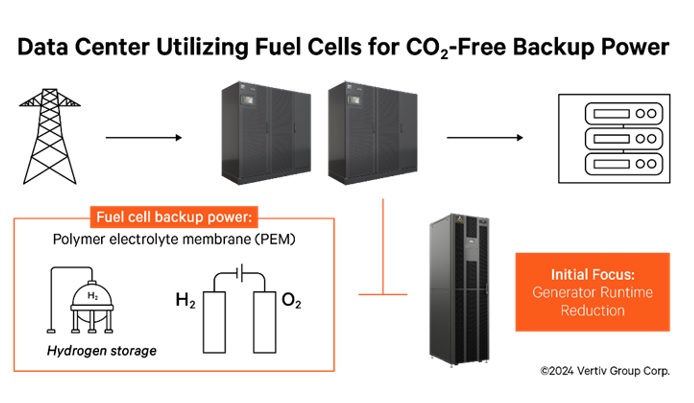
Figure 1. Diagram of a data center with PEM fuel cells as backup power, replacing a traditional diesel generator.
Fuel cells generate power independently through an electrochemical reaction between hydrogen and oxygen. When hydrogen is available, fuel cells can provide continuous power without recharging. Integrating fast-start polymer electrolyte membrane (PEM) fuel cells at the UPS level can reduce generator starts by serving as a continuous-duty battery. Moreover, instead of switching to the generator, the UPS can turn to the fuel cells for backup power (see Figure 1) during power outages. PEM fuel cells are also a practical alternative for replacing traditional diesel generators, while solid oxide fuel cells (SOFCs) can replace the utility grid.
Read more:
Evaluating the Potential of Fuel Cells for Data Center Power
Capacity growth has become a constant challenge for the data center industry and that growth is accelerating the push for more carbon-efficient solutions.
Energy Storage Technologies
Vertiv™ Dynamic Power reimagines power infrastructure for companies, enabling reliable, continuous power and the ability to meet growing energy demands. Applying the BYOP strategy, this portfolio of hybrid power solutions (see Figure 2) enables you to efficiently provision, control, and manage your power infrastructure.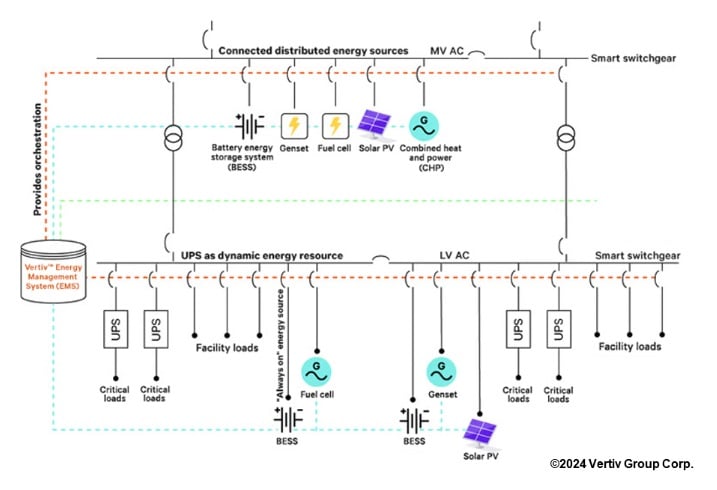
Figure 2. The Vertiv™ Dynamic Power energy ecosystem, an example of the BYOP strategy
The energy storage technologies in the Vertiv™ Dynamic Power portfolio include the Vertiv™ DynaFlex Battery Energy Storage Systems (BESS) (see Figure3). This solution utilizes UL9540A lithium iron (LFP) batteries to deliver utility-scale, reliable power supply for mission-critical operations.
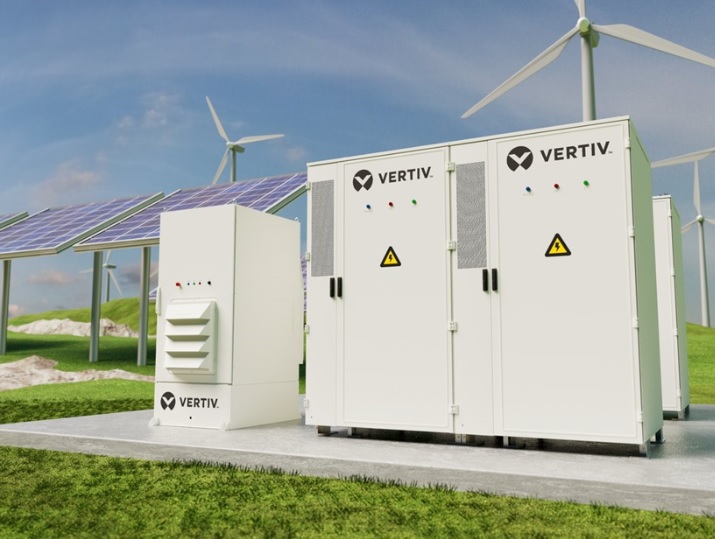
Figure 3. The Vertiv™ Dynaflex BESS can bridge the necessary power requirements of a facility during emergencies and routine operations.
Integrating the Vertiv™ Dynaflex BESS with the Vertiv™ DynaFlex Energy Management Systems (EMS) enables sophisticated energy management, including demand management and the potential to monetize excess energy back to the grid, allowing seamless transitions between various energy sources for improved efficiency and reliability.
The Vertiv™ Liebert® EXL S1 UPS system (see Figure 4) offers stable power while enabling energy efficiency. Featuring Dynamic Online mode, it operates up to 99% efficiently, supporting operational cost savings without compromising system availability.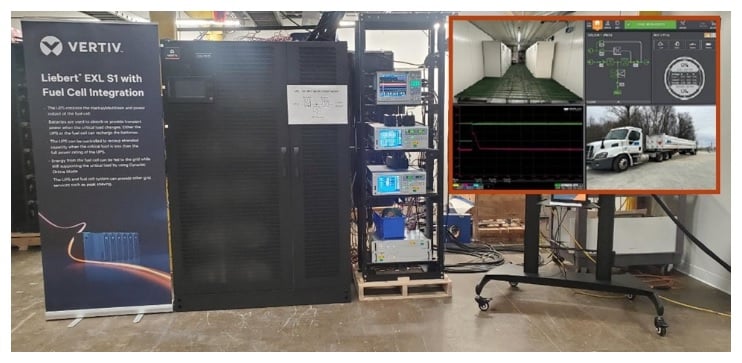
Figure 4. Installation of the Vertiv™ Liebert® EXL S1 UPS integrated with a PEM fuel cell at the Customer Experience Center in Delaware, OH
The Vertiv™ Liebert® EXL S1 UPS' Dynamic Grid Support function allows frequency regulation by adjusting input power. This functionality, alongside the system's rapid response to frequency changes, enables data center operators to engage in demand management and response, enhancing overall energy management. With fuel cell integration, Vertiv™ Liebert® EXL S1 becomes a reliable backup power supply that supports continuity during sudden power changes.
Pathway to getting off the grid
When exploring energy management solutions for your data center, evaluate the facility's readiness to apply the BYOP strategy. Consider these steps on your pathway to getting off the grid:
Planning for a BYOP microgrid
To effectively plan for a BYOP microgrid, conduct a comprehensive analysis of your facility's energy needs, potential alternative sources, and storage capabilities. Map the utility outage frequency and duration to determine if log duration batteries can be used in lieu of generators. Collaboration with teams in energy management and microgrid technology can help tailor a solution that improves efficiency and reliability for your operations.
Integrating fuel cells
Fuel cells can enhance your facility’s backup power capabilities, supporting both reliability and scalability. Combined with on-site hydrogen storage, this establishes a resilient energy source for grid-independent operations as required.
Deploying BESS and alternative energy sources
Pairing BESS with alternative energy sources such as solar PVs as DERs supports stable power supply. This approach can reduce reliance on conventional power sources and improve a facility's carbon profile.
Implementing integrated energy management systems (EMS)
Implementing integrated energy management systems (EMS) with real-time monitoring enhances data center performance, reliability, and adaptability. These systems offer a real-time view of energy usage. Monitoring identifies inefficiencies quickly, enabling fast corrective actions.
EMS also supports remote management, helping data centers adapt to changing energy demands and maintain operations without compromising performance, supporting cost efficiency and reliable service.
Is your facility ready for BYOP?
The BYOP strategy paves the way for data centers to start their path toward grid independence, supporting reliable power, promoting carbon reduction efforts, and enhancing reliability. Discover the potential of always-on power for mission-critical operations with Vertiv™ Dynamic Power. Learn how to provision, control, and manage your power infrastructure efficiently.
If you want to learn more about our developments with the Vertiv™ Dynamic Power, you can check out Vertiv.com for more information and download the white paper.