
Learn how hydrogen fuel cells can be the right solution for your data center's backup power needs.
Hydrogen fuel cells deliver reliable backup power for data centers while meeting environmental regulations and enabling grid support services for AI operations.
Data centers face mounting environmental regulations and surging power demands from AI workloads, but traditional diesel backup generators are becoming increasingly difficult to permit and deploy. Hydrogen fuel cell technology emerges as a game-changing solution, offering zero on-site emissions while delivering reliable backup power for critical digital infrastructure.
Comparable to technological cycles and developments, proton exchange membrane (PEM) fuel cell technologies offer compelling advantages but also come with important considerations for implementation. Specific challenges are driving technological research and innovation from various sectors and are seen to open more investment and business opportunities, such as:
- Hydrogen infrastructure: Current limitations in hydrogen production and delivery networks require careful planning for fuel availability.
- Space requirements: Larger footprint needed compared to diesel generators, including safety setback distances and storage areas.
- Operational expertise: Need for specialized training and safety protocols for hydrogen handling.
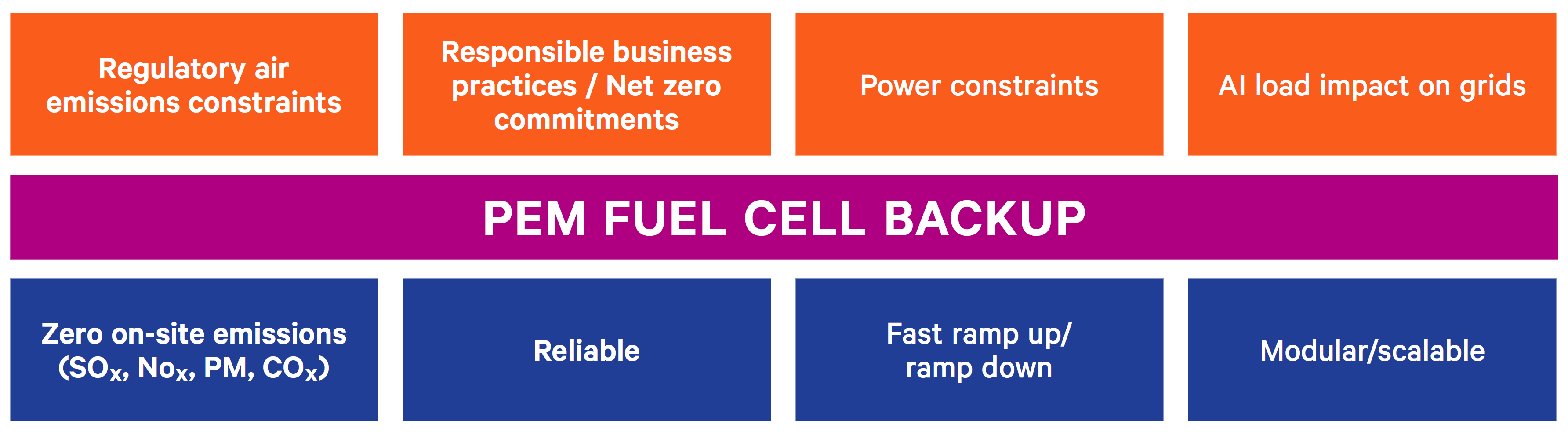
Figure 1. Visualizing the challenges and advantages of PEM fuel cells as a backup energy source. Source: Vertiv
Operators, facility managers, and energy and infrastructure professionals aiming to take advantage of its long-term benefits should learn how this innovative technology:
- Eliminates nitrogen oxides (NOx), sulphur oxides (SOx), and particulate matter and Scope 1 emissions, simplifying environmental compliance
- Delivers rapid response capability for managing AI workload fluctuations
- Enables seamless microgrid integration and grid support services
- Provides modular, scalable solutions for growing power demands
- Operates quietly, reducing noise pollution and permitting challenges
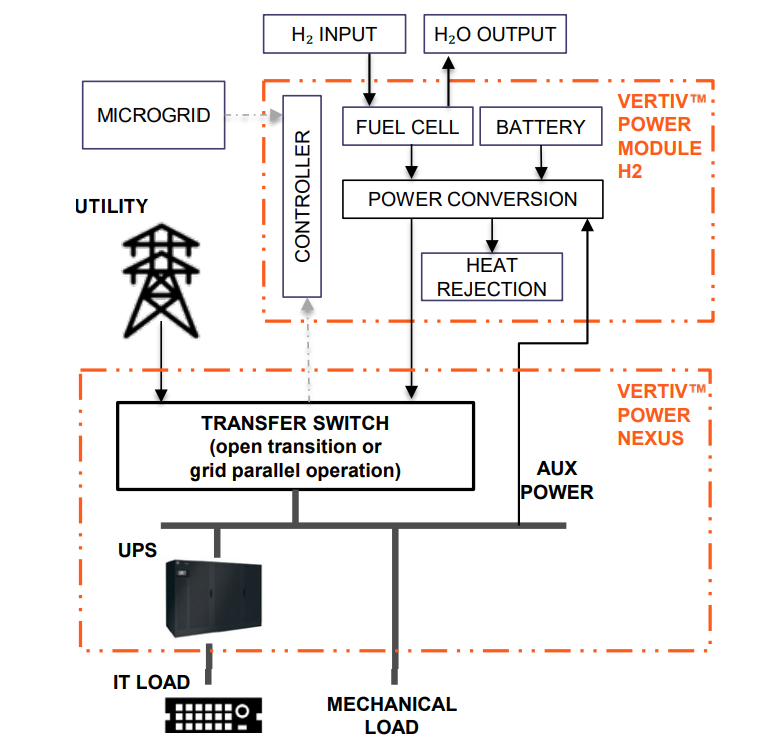
Figure 2. PEM fuel cell backup system block diagram. Source: Vertiv
With the industry moving toward net-zero goals and facing increasing power constraints, the white paper “Hydrogen fuel cells for data center power” provides detailed insights to understand infrastructure requirements and safety considerations. Data center planners and operators can use the insights to assess site-specific feasibility for hydrogen fuel cell deployment and to plan for successful implementation and operations.
<