
What happens when academic curiosity meets industry pressure? You get the foundation for fully autonomous data centers.
Think about how engineers design systems for space. They build for extreme heat, radiation, and high velocity: conditions they can’t fully simulate on Earth. Every component has to be ready before launch because there’s no going back once it’s out there.
That same mindset now applies to data center infrastructure. We’re building ahead of need. Racks pushing 200 kilowatts, soaring energy requirements, and the demand for zero-carbon operations aren't future possibilities. They’re fast-approaching realities.
Some of the most important breakthroughs aren’t coming from product teams alone. They’re emerging from long-term research efforts, often in partnership with university labs and global consortiums. These teams explore ideas that may take years to commercialize but will eventually form the backbone of the industry.
Why we need academia in the loop
The questions shaping the next decade aren’t small.
How do we power and cool machines running at extreme density? What voltage levels will next-gen racks require? How do we support today’s AI systems while laying the groundwork for quantum? And how do we do it all while cutting carbon?
These aren’t just technical challenges. They push against the limits of what’s physically possible. Solving them takes more than any single company can handle.
Academic partnerships create space for experimentation, away from the pressure of quarterly goals. Teams can test bold ideas, take risks, and develop technologies that aren’t commercially viable yet but will be soon. The work often starts years before the market is ready, and that’s exactly the point.
These programs do more than move innovation forward. They give us a clearer view of what’s coming. Researchers spot problems early, long before they hit production environments, and shape solutions that match where infrastructure is actually headed.
How collaboration moves the industry forward
Joint work between industry and academia isn’t theoretical. It’s already shaped the way data centers operate today.
A decade ago, early research partnerships helped validate lithium-ion batteries for back up power. Six years ago, they played a key role in advancing direct-to-chip liquid cooling. Right now, we’re working on new cooling methods built to handle higher heat loads, essential for supporting the next wave of AI-driven performance (see Figure 1).
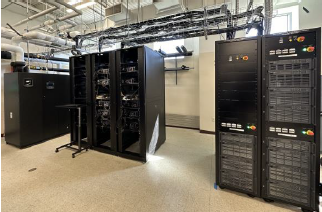
Figure 1. Vertiv, NVIDIA, and Binghamton University tested a pumped two-phase direct-to-chip liquid cooling system in high-density rack environments. Source: Pumped two-phase direct-to-chip cooling: Advancing AI data center efficiency
These partnerships continue to grow through focused research across the globe. At Ohio State University, we've funded high-power electronics research to drive the future of power distribution (see Figure 2). Through the Center for Energy-Smart Electronic Systems (ES2) where I chair the Industry Advisory Board, we're working with multiple universities on thermal solutions for 3D chip stacks.
In India, we helped establish a simulation lab at the College of Engineering Pune Technological University, or CoEP, to study cooling challenges in tropical climates. In Southeast Asia, Vertiv partnered with the National University of Singapore (NUS) and Nanyang Technological University (NTU) Singapore to launch the Sustainable Tropical Data Centre Testbed (STDCT), the region’s first facility to validate advanced cooling in high-humidity, high-temperature environments.
Through Advanced Research Projects Agency-Energy (ARPA-E)’s COOLERCHIPS program, we're also exploring unconventional heat removal methods. Across industry-university partnerships, we’re advancing over a hundred emerging technologies with our university collaborators.
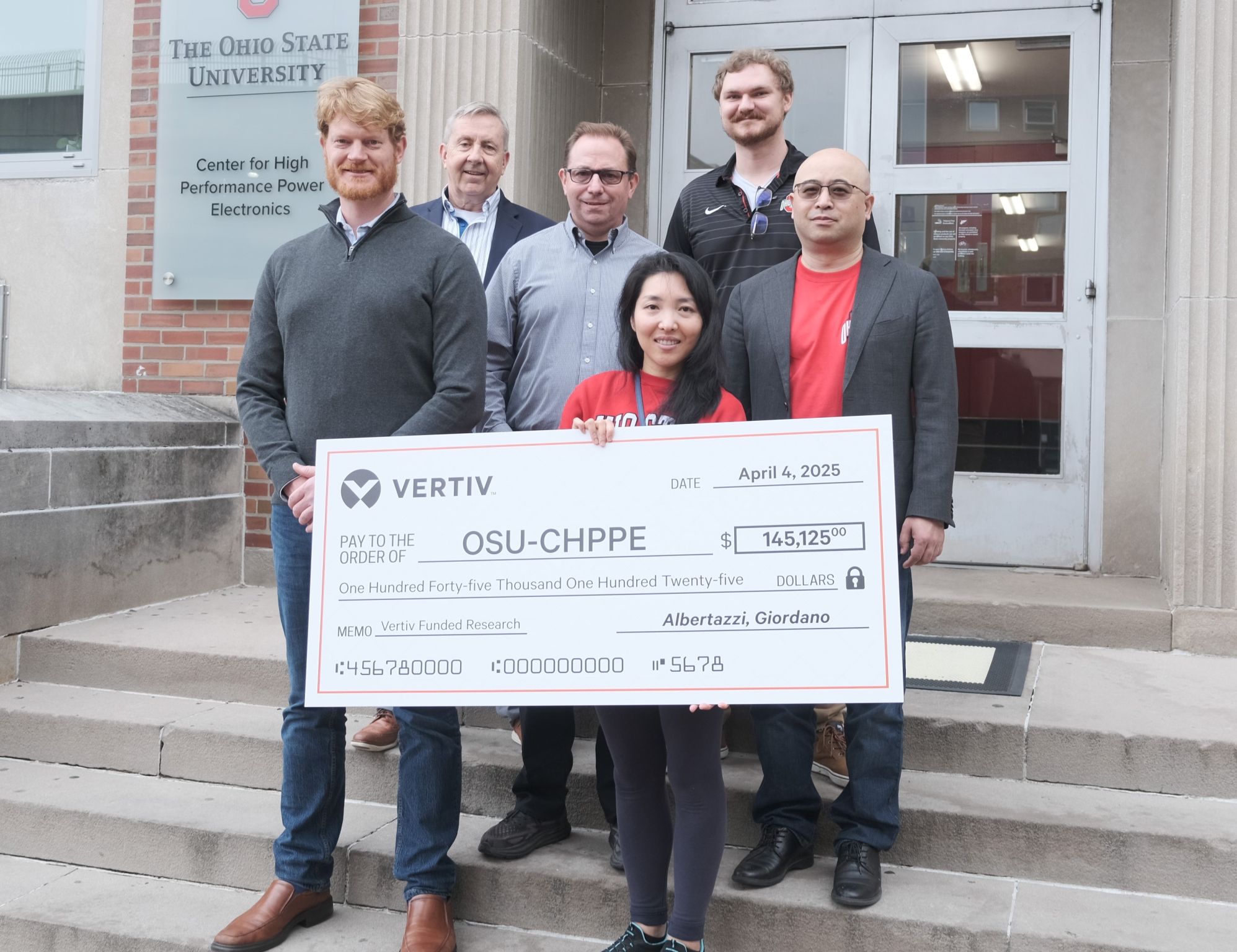
Figure 2. Vertiv funds Ohio State’s Center for High-Performance Power Electronics (CHPPE) to develop next-generation power systems for AI data centers. Vertiv Chief Technology Officer Greg Ratcliffe (second to the left) and Power Engineering leaders finalized the partnership. Source: Ohio State University College of Engineering.
Where academia and industry build capability
Technical readiness isn’t enough. Talent readiness matters just as much. The data centers of tomorrow will need engineers who understand both power and cooling at a system level. That kind of expertise begins in university labs, where students work directly with the same thermal, power, and control platforms found in real-world environments.
We support these programs by contributing operational infrastructure and working alongside faculty on applied research. In this way, the consortium model is shifting from useful to essential.
And just like space systems are built for orbits they haven't reached yet, today’s data center infrastructure has to be designed for demands we can’t fully measure yet.
To dive deeper into AI-ready infrastructure, visit the Vertiv™ AI Hub and see how we’re building for what’s next.