
Sustainability Day 2025 arrives at a tipping point for the digital future. The challenge is no longer whether we can expand capacity—but how to do it while staying resource-conscious.
As Sustainability Day 2025 approaches, it’s worth looking at how digital growth and resource stewardship can move together. Oxigen’s story shows this in practice. As their digital footprint expanded, they had to scale power and cooling for artificial intelligence (AI) workloads without losing sight of their environmental commitments. Working with Vertiv, they built a foundation that balanced performance, efficiency, and resilience.
AI continues to push this challenge across the industry, driving unprecedented demand for compute, power, and cooling. The real test is expanding capacity while managing energy and material use responsibly. At Vertiv, we strive to support digital progress while reducing waste and stretching resources further—not just through technology, but through choices emphasizing efficiency and resilience.
Designing energy-efficient facilities for high-performance operations
High-performance computing (HPC) workloads, such as AI, are increasing data center energy demand. According to the International Energy Agency (IEA), in 2024, data centers consumed 415 terawatt-hours (TWh) or 1.5% of global energy. By 2030, that number is expected to more than double to 945 TWh. This surge in demand makes efficiency just as crucial as resilience. Backup power, distribution, and storage are no longer just about uptime—they’re about how responsibly and efficiently reliability can be delivered.
Energy-efficient UPS systems and always-on microgrids
Backup power must evolve. At Vertiv, we’ve pushed uninterruptible power supply (UPS) design toward lower conversion losses, smarter monitoring, and more adaptable storage. Whether with lithium-ion or nickel-zinc batteries, the principle of energy-efficient UPS systems is the same: scale responsibly while minimizing stranded energy.
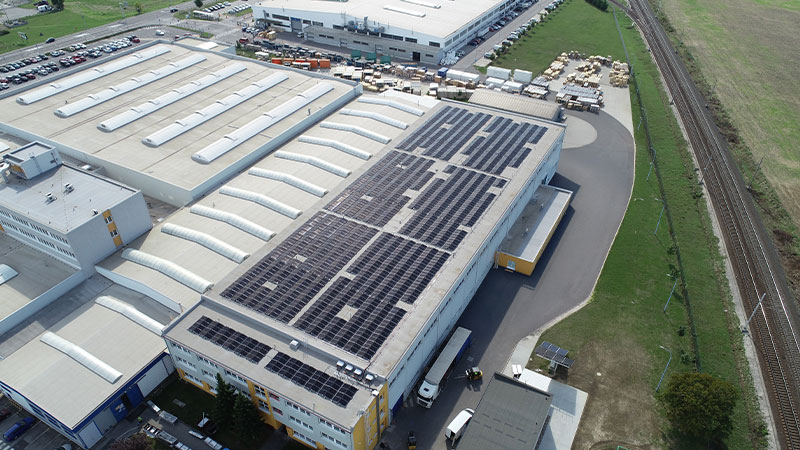
Figure 1. Overhead shot of the PV installation at Slovakia's Vertiv Nove Mesto office. This system reduces reliance on grid power across the company's global facilities. The array demonstrates how industrial spaces can effectively harness alternative energy. Source: Vertiv
We’re also learning how to integrate new sources like hydrogen fuel cells into the mix. The principle is about designing systems that allow alternative energy to work at scale with reduced on-site emissions.
Water-efficient cooling for high-density racks
High-density rack heat levels are at an all-time high. Graphics processing units (GPUs) can be as hot as a room heater. Data center cooling is no longer just about removing heat—it’s about stewarding scarce water resources.
At Vertiv, we’ve been designing coolant distribution units (CDUs) that enable liquid cooling even without complex chilled water loops. Refrigerant-based heat rejection allows data centers to efficiently cool denser configurations at smaller footprints while conserving water. Just as important, they open the door to reusing captured heat, turning what was once waste into a resource the wider energy ecosystem can put back to work. That’s the kind of efficiency our industry needs to scale.
Case Study: Gulf Data Hub – energy and resource-conscious design in practice
The Gulf Data Hub (see Figure 2) project puts these principles to the test. The goal was to build a modern research facility under careful conditions: a sensitive location, budget limits, comprehensive waste management requirements, and the need for low-carbon energy and water recycling.
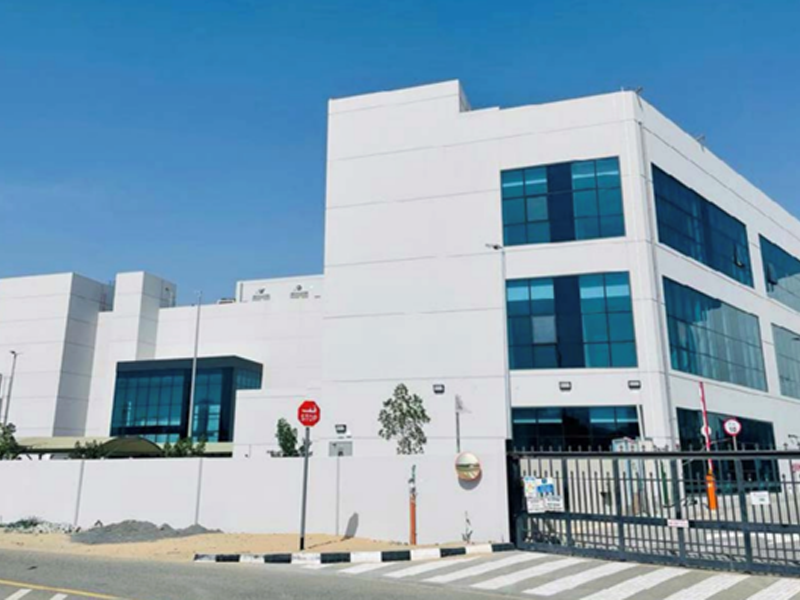
Figure 2. Gulf Data Hub (GDH) is a colocation services and purpose-built data centers provider, specializing in disaster recovery, cloud solutions, software as a service (SaaS), and infrastructure as a service (IaaS). Source: Vertiv
Our role was to stabilize power, cut energy use, and design cooling that worked without extra water or sprawling infrastructure. The outcome proved that high-performance facilities can be delivered responsibly, even in resource-constrained environments.
Explore the Gulf Data Hub story
Gulf Data Hub features energy-efficient solutions to enable effective data center builds
Discover how Vertiv and GDH balanced ambitious design goals with efficiency, resilience, and scalability in one of the region’s most advanced colocation facilities.
Circular economy in practice
Resource efficiency starts at the design table. By prioritizing repairability, replaceable components, and remote diagnostics, we extend product lifespans and cut unnecessary waste. At Vertiv, we also tackle lifecycle challenges head-on. Our Vertiv Trade-In Program allows retired equipment to be recovered and recycled responsibly through certified partners. Every product needs a defined end-of-life path that fits into circular economy principles.
Data-driven waste elimination and supply chain resilience
Waste elimination has to be embedded into daily operations, guided by clear metrics and accountability. Our Vertiv Operating System is one way we embed environmental, health, and safety principles into daily decisions—tracking energy, water, waste, and recycling to maintain measurable progress. Resilience doesn’t stop at the facility gate. By diversifying suppliers and localizing production where possible, we strive to reduce risk, shorten delivery times, and cut emissions. A resilient supply chain is also a more resource-conscious one.
Powering growth responsibly
Our role is to integrate energy, water, and material efficiency across every part of what we do—products, operations, and supply chains—so growth and responsibility move together.
Just as Google paired rapid digital expansion with responsible energy sourcing, at Vertiv, we strive to approach critical infrastructure with a similar mindset, enabling scalable, resource-conscious digital growth.
Responsible growth is becoming the standard our industry will be judged by. The task ahead is to scale digital capacity while safeguarding the resources that make it possible. Read the Vertiv Responsible Business Report 2024 today.