
Learn about the critical challenges that data center facilities’ traditional power infrastructure face under AI-computing conditions, based on comprehensive testing results and insights.
Vertiv, ST Telemedia Global Data Centres, and Baudouin have formed a multi-stakeholder partnership representing a synchronized push toward AI-ready infrastructure standards, combining Vertiv's innovative power continuity solutions, ST Telemedia's practical insights from production AI environments, and Baudouin's proven generator reliability. The alliance produced a joint validation methodology specifically engineered to test infrastructure resilience against the volatile power characteristics that define modern artificial intelligence (AI) workloads.
AI workloads cause power fluctuations that require significant modifications to conventional data center infrastructure. Graphics processing unit (GPU) clusters fluctuate continuously during training cycles, causing rapid changes that can be mitigated through continuous testing and power-smoothing technology. When backup power becomes critical, traditional systems may struggle or fail to seamlessly transfer between sources, underscoring the urgent need for validated, AI-optimized infrastructure solutions.
Facility implications: Stabilizing power with advanced UPS features
In collaboration with customers ST Telemedia and Baudouin, Vertiv conducted comprehensive testing on a 2.4 MW generator with dual UPS systems. Running four real-world scenarios—from current H100 GPU loads to worst-case 100% AI deployments—the study identified at least one scenario that enabled downtime risk mitigation: advanced load smoothing features.
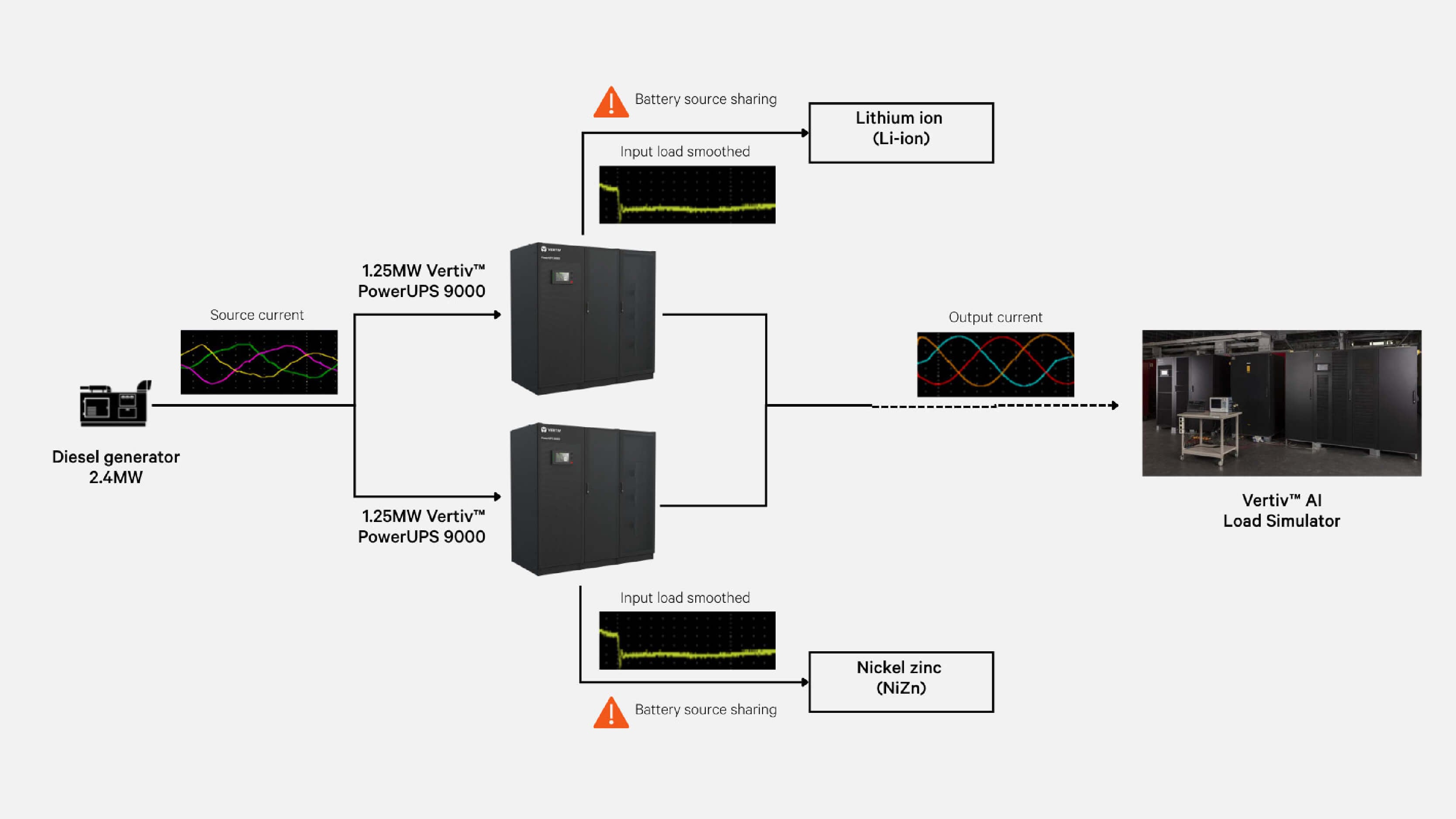
Figure 1. Test setup to replicate AI power demand patterns in a controlled laboratory environment. Source: Vertiv.
The test identified a critical performance threshold: when AI workloads approached ~75% of the total IT load, generator voltage and frequency could fall outside the defined UPS tolerance windows. Below the threshold, facilities can manage with configuration changes. Above it, operations exceed original infrastructure design parameters.
Three critical assessment factors emerged for facility operations:
- Current AI load percentages in relation to stable generator operations
- Scalable UPS configurations and monitoring capabilities right-sized to current and future needs
- Maintenance and operational protocols for bypass transfer
Infrastructure decisions needed now
The gap between theoretical generator support and actual delivery under AI loads is measurable. As decision-makers plan their current and upcoming AI deployments, they will need to evaluate actual facility capacity. Testing data establishes new baseline requirements for generator sizing, UPS specifications, and load distribution. Infrastructure decisions must account for these realities now, not after experiencing synchronization failures during utility outages.
Find out whether your current data center power infrastructure can support your AI needs today and in the future.