Watch how distributed AI drives infrastructure changes across cloud and edge environments
Scott Armul, Chief Product and Technology Officer at Vertiv, explains how inference deployments will drive the next wave of AI adoption.

Discover how six AI archetypes map workload demands to proven infrastructure designs
Vertiv presents a decision framework with six AI archetypes mapping workload demands to infrastructure and reference designs.

800 VDC architecture selection for high-density AI compute
As the AI era continues to progress and demand increases, conventional AC distribution is running out of physical space for conductors, connectors, and cooling infrastructure. 800 VDC offers a path forward. Operators can use this paper’s framework to evaluate each decision criteria and design element every deployment must address.
Inteligência artificial
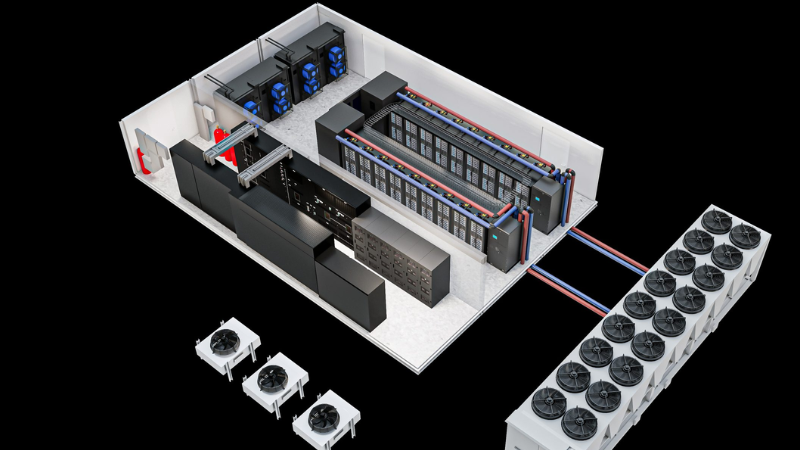
From pilot to production: Three enterprise AI infrastructure decisions that matter
Explore three enterprise AI infrastructure decisions that matter when moving from pilot to production: workload placement, token economics, and GPU-ready operations.

AI infrastructure moves from ambition to execution: Five conversations at DCD AI Week
Vertiv leaders join NVIDIA ecosystem partners, infrastructure experts, and industry researchers across five DCD webcasts examining how operators can turn AI ambition into deployable, productive, and adaptable capacity.
DCD AI Week 2026: From planning and design to deployment reality - What operators must solve next
Discover how AI infrastructure demands system-level design, from power train to thermal chain, in the first episode of DCD AI Week 2026.
Densificação extrema

Extreme densification: The defining macro force shaping data center design
Vertiv Frontiers: Extreme densification is a critical driver of modern data centers, accelerated by AI and HPC workloads, and creates additional complexity in power, cooling, and space.
Validating AI Factory design challenges with physical system-level testing
The gaps that determine whether AI factory capital produces productive compute exist at the seams between systems. This brief introduces the closed-loop validation methodology connecting simulation, physical testing, and operational learning into a continuous cycle of reduced uncertainty.

Spotlight: Bringing NVIDIA AI Computing Capability to the Naval Postgraduate School
Discover how Vertiv helped the Naval Postgraduate School deploy a high-density, liquid-cooled AI infrastructure powered by NVIDIA DGX GB300 to accelerate AI research, education, and mission-critical innovation.
Autonomia energética

Is BYOP right for your data center?
Learn a structured framework for evaluating bring your own power (BYOP) for data centers, when dedicated generation can improve the development path, and when other options may present less risk.

BYOP implementation: Integrated planning for data center generation at scale
Learn five critical success factors for BYOP data center implementation.
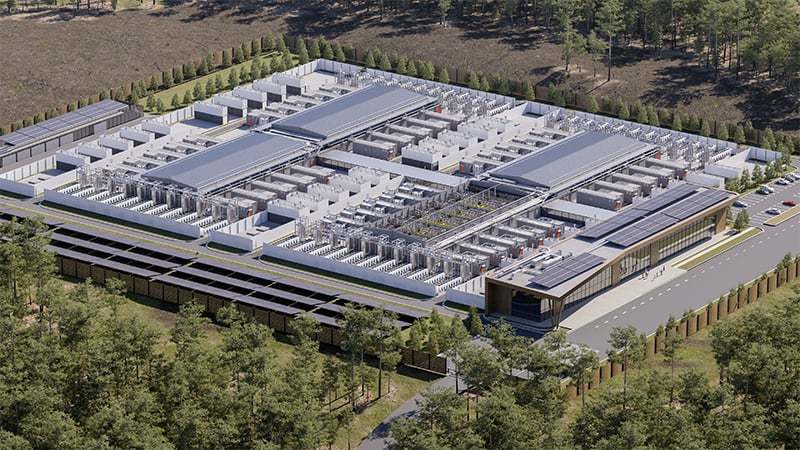
Grid or on-site? The AI infrastructure decision
Grid or on-site? We explore the infrastructure decision shaping AI data center deployment — and why the five-year interconnection queue is forcing operators to choose.
Em destaque na série do blog

Inovar em voz alta
Para prosperar nos negócios, os funcionários têm de trabalhar em conjunto e encontrar uma forma de fazer coisas novas ou de fazer melhor as coisas existentes e, em seguida, tornar esse processo parte da cultura da empresa.
DCD AI Week 2026: From planning and design to deployment reality - What operators must solve next
Discover how AI infrastructure demands system-level design, from power train to thermal chain, in the first episode of DCD AI Week 2026.

Full-stack infrastructure planning for high-density AI deployments
Two data center leaders discuss why treating compute, power, and cooling as a single engineered system is no longer optional as rack densities climb.
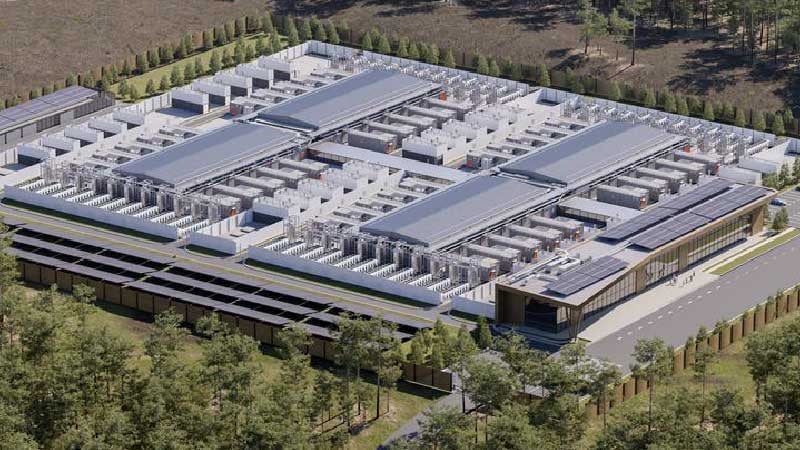
Converged physical infrastructure: Moving from components to system outcomes
Converged physical infrastructure integrates power, thermal, and controls as one system for AI-ready data centers. Learn the five non-negotiables for success.

Atividade empresarial responsável
Na Vertiv, esforçamo-nos por fomentar os princípios de gestão ambiental, promovendo um local de trabalho seguro, inclusivo e cativante, e conduzindo os nossos negócios de forma responsável. A nossa visão é possibilitar um futuro mais resp...
World Sustainability Day 2026: What data center infrastructure growth demands from engineering
Explore how engineering decisions across cooling, power, and water management can address resource demands as data center infrastructure continues to grow.

Four dimensions of efficiency: A systems approach to digital infrastructure design
Learn how Vertiv's systems-based approach to data center design embeds efficiency across four key dimensions: energy, water, materials, and carbon management.

AI and safety: How Vertiv embeds protection into every layer of the work
Discover how Vertiv builds safety into every layer of its operations — from daily site huddles to global training — to protect the people powering the AI era.

Blogue de tecnologia
Descubra ideias e inovações da Vertiv e o que está a moldar o futuro da infraestrutura digital: desde energia e arrefecimento ao design, operações e tecnologias emergentes.

Precise battery management for AI infrastructure with accurate state of charge (SOC) and state of health (SOH)
AI load spikes don't wait. See why state of charge (SOC) and state of health (SOH) precision is the smarter path to stable, scalable AI power management.
Monitoring and management for liquid-cooled environments
Learn how centralized monitoring and management improve visibility, speeds of response, and support liquid-cooled data center operations.
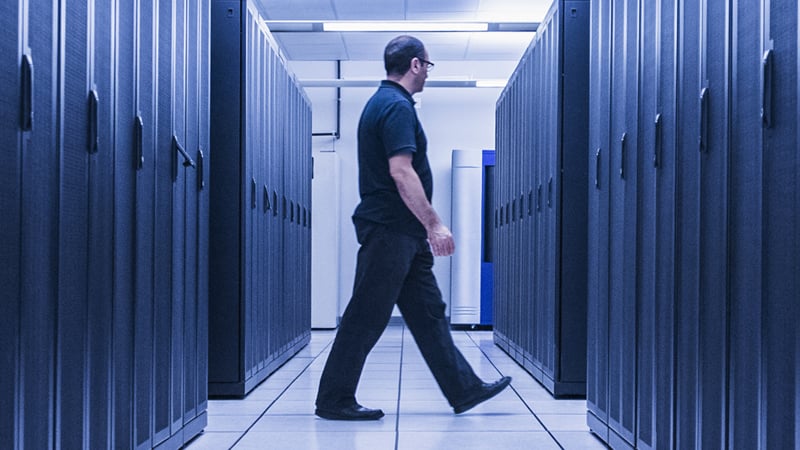
Serial consoles for driving AI factories’ uptime
Learn why serial console servers can be the only reliable recovery path when hardware fails at hyperscale.
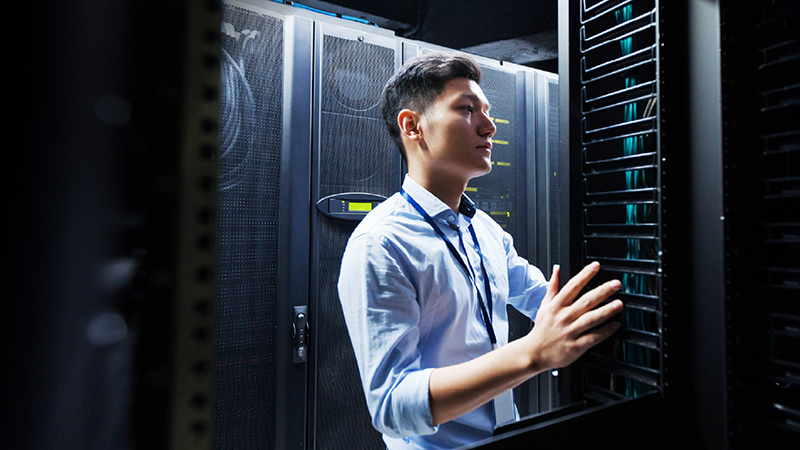
The data center thermal chain
From 20kW racks to 150kW AI clusters, understand the cooling architecture that keeps scaling.
Evolução da cadeia térmica

What if cooling wasn’t a single product, but a complete thermal chain?
Explore how data centers are managing the increasing heat loads from high-performance computing (HPC) and artificial intelligence (AI) workloads in this comprehensive guide to modern thermal management strategies, from liquid cooling to heat reuse.
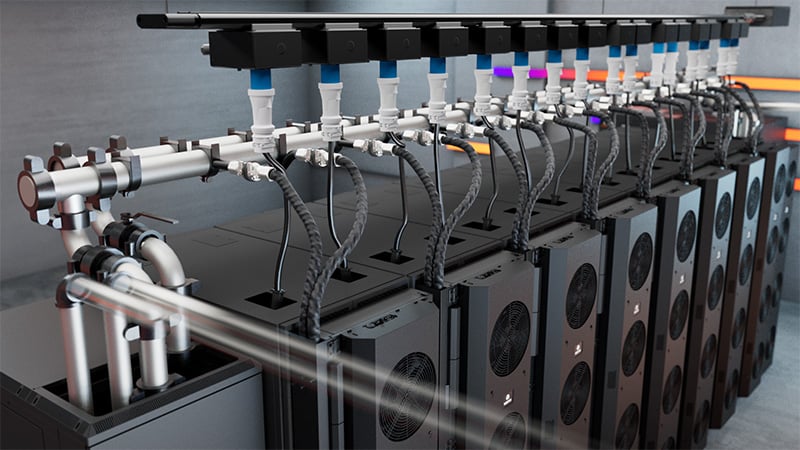
Rethinking heat: A byproduct of useful work and a resource worth capturing
Explore why AI infrastructure is changing how operators view data center heat, from a cooling challenge to a concentrated resource worth capturing.
The data center thermal chain
From 20kW racks to 150kW AI clusters, understand the cooling architecture that keeps scaling.
Design digital-first

DCD AI Week 2026: From blueprint to build - Designing smarter with reference architectures and digital twins
Explore from DCD AI Week 2026 how reference architectures and digital twins validate AI factory infrastructure before deployment for data center engineers and operators.

What digital twins reveal about AI infrastructure design
Digital twins are transforming AI data center design by enabling real-time simulation of cooling, power, and electrical systems before construction begins. Learn how Vertiv and NVIDIA Omniverse are advancing physically accurate infrastructure modeling.

Digital twins for operations: Intelligent management
Explore how digital twin technology is moving beyond design validation into real-time operational management of AI data centers — and the financial case for data center operators.
Transformação da arquitetura de energia
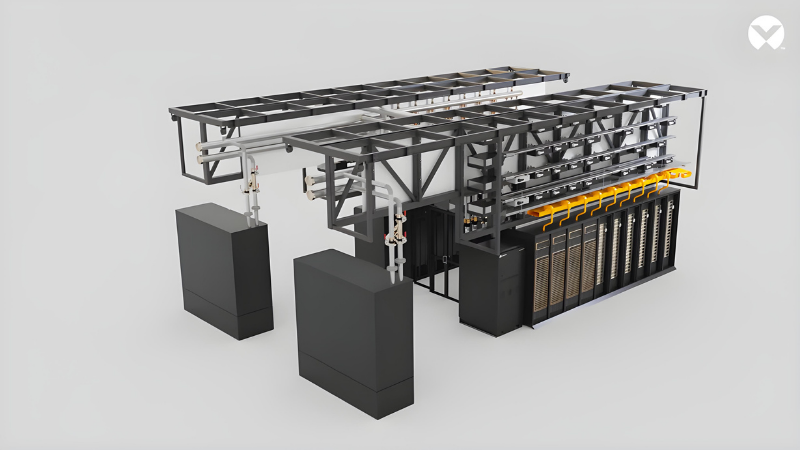
A decisão de 800 VCC: um guia prático para arquitetura de energia AI
Explore quando a 800 VCC faz sentido para centros de dados de IA, como adotar fases e porque é que a opcionalidade da arquitetura é importante.

From rack to data hall: The practical path to 800 VDC
AI rack density is pushing conventional power delivery toward physical limits. Learn how Vertiv is developing a phased 800 VDC architecture from rack-level sidecars to centralized data-hall power.

BESS and UPS roles in large data center power architectures
Learn how UPS and BTM BESS architectures differ, how they work together, and how each supports resilience, flexibility, and AI power smoothing.