
Flexible, scalable infrastructure designs are crucial for enabling AI innovation, as long as deployments and usage don't come at the expense of reliability and efficiency.
Accelerated compute platforms and cloud services are driving power systems with an increasingly complex challenge. These facilities need to deliver unwavering reliability, support surging energy demand, and reduce environmental impact. At the same time, these demands are causing a heavy strain on utility grids and are reshaping how data center operators—hyperscalers and enterprises alike—approach energy management, making innovation and environmental responsibility critical priorities for the future.
AI workloads and energy complexity
AI quickly emerged as a driving force behind many industries. But for all its promise, AI comes with significant energy requirements. Training AI models consumes enormous computational power, often leading to short bursts of intense energy demand that push power systems to their limits. Unlike traditional IT workloads with consistent power needs, AI introduces unpredictable, high-density peaks that demand systems to be capable of rapid adaptation. On the flip side, facilities ill-equipped to handle these rapid load fluctuations can cause rapid equipment deterioration and potential downtimes.
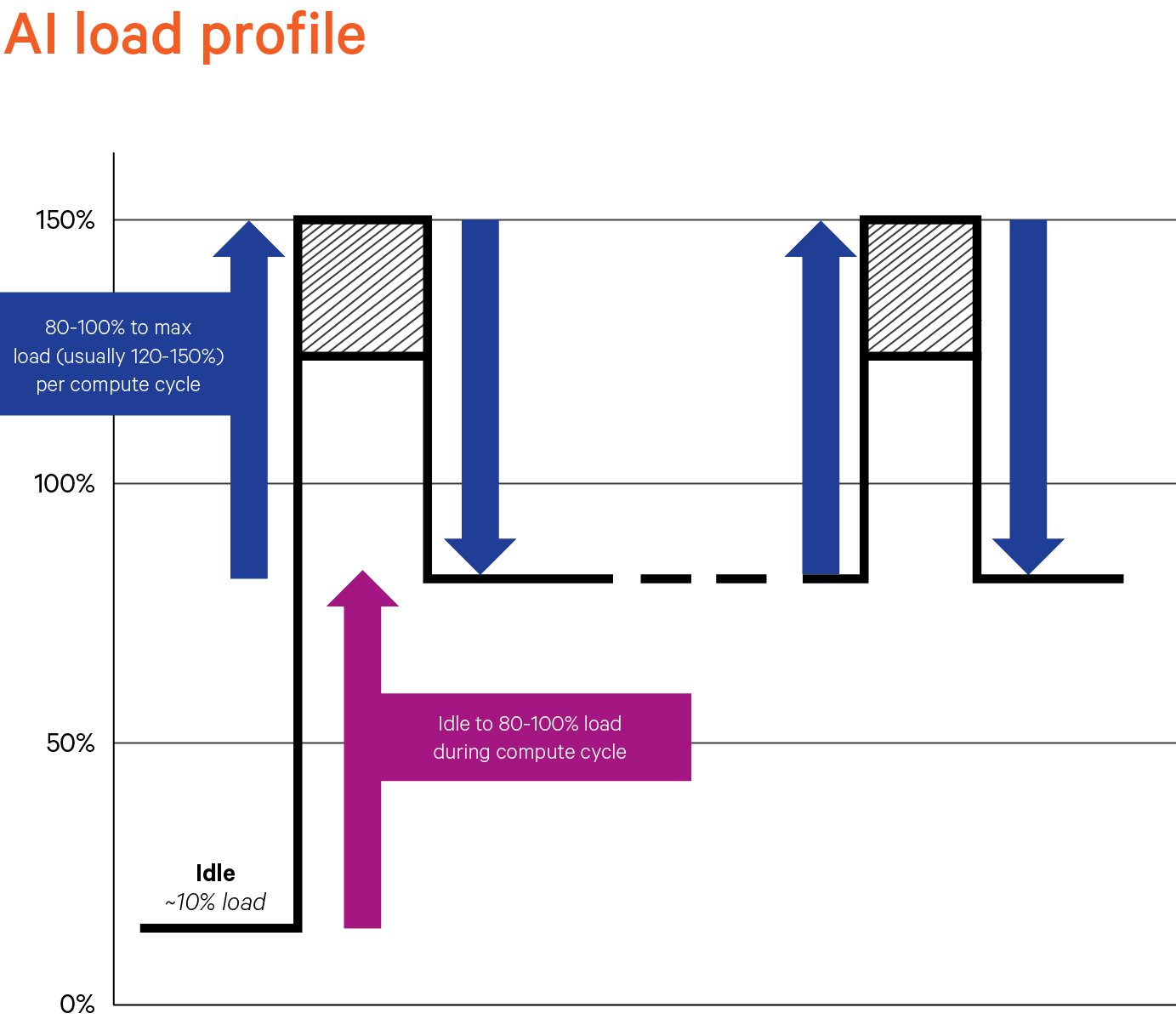
Figure 1. The power requirements of AI loads are characterized by sharp, short-term increases in demand.
For data center operators, this is a technical challenge as much as a strategic business imperative. Maintaining uptime while scaling AI workloads can make the difference between staying competitive and falling behind. To meet these challenges, power systems must evolve to handle the variability and intensity of AI-driven compute platforms.
The strain on power grids
With data centers’ energy requirements surging, particularly in regions where hyperscale facilities are geographically clustered, they have become major players in the energy ecosystem. First, utilities are struggling to keep up. Expansion in data center capacity is often delayed because local grids simply don’t have the infrastructure to deliver the energy needed. Second, this expansion demands that operators not only focus on internal energy efficiency but also play an active role in regional energy stability.
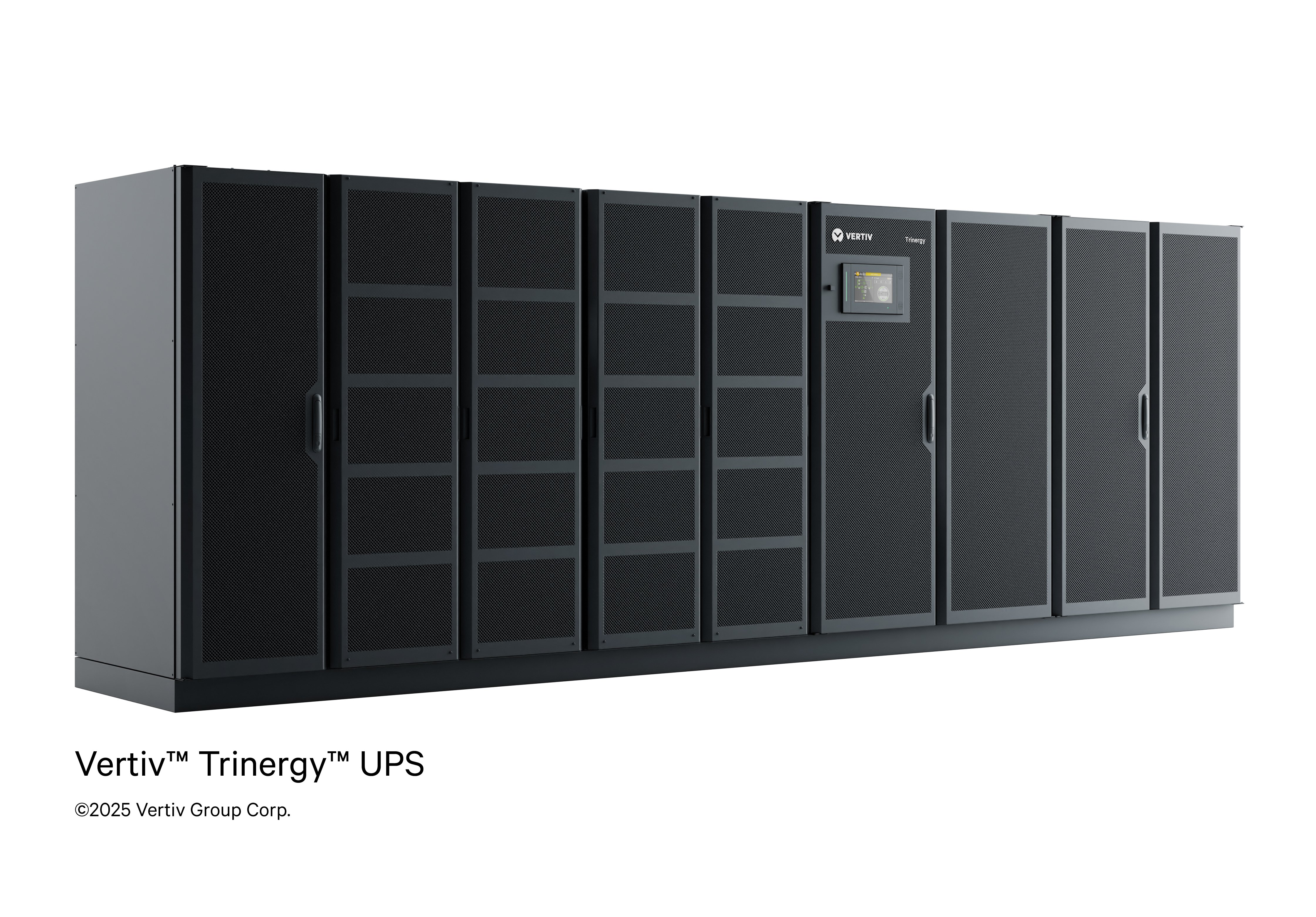
How can the industry address this? Grid-interactive solutions like uninterruptible power supply (UPS) systems offer part of the answer. Incorporating battery energy storage systems (BESS) alongside or incorporated into UPS components allows data centers to store energy during off-peak hours and release it during peak demand. This functionality mitigates the strain on the grid and simultaneously creates opportunities to use stored energy and advanced energy management controls when needed to help the grid maintain stability by balancing energy supply and demand dynamically.
Toward efficiency and environmental responsibility
Data center energy consumption brought environmental impact into sharp focus, highlighting that facilities’ practices must be environmentally responsible, not an option. Operators are increasingly being scrutinized for their Scopes 1 and 2 emissions, making it critical to adopt practices that minimize carbon footprints and energy losses.
One of the most promising advancements here is the shift from valve-regulated lead-acid (VRLA) batteries to lithium-ion (Li-ion) technology. Compared to their predecessors, Li-ion batteries offer longer lifespans, faster recharge times, and a smaller physical footprint. This means fewer replacements, less downtime, and greater installation flexibility. But Li-ion batteries' biggest advantage is that they are ideal for integrating alternative energy sources, serving as the bridge that transforms intermittent solar or other power sources into reliable backup energy.
Energy-efficient distribution systems, like open busway designs and higher-voltage rack power distribution, are critical for delivering higher power, minimizing losses, and maximizing efficiency. Operators are also adopting smarter strategies such as modular power systems, which allow facilities to incrementally expand energy delivery without disrupting operations. These innovations not only reduce operational costs but also align with broader environmental goals.
Actionable insights
Making a high-level roadmap and navigating these evolving challenges requires a forward-thinking approach:
- Design for flexibility: Scalable and modular power systems enable infrastructure growth in tandem with AI and other high-performance workloads.
- Integrate advanced energy management solutions: Resilient energy power management systems (EPMS) offer real-time insights into energy usage, enabling smarter decisions that optimize performance.
- Collaborate with industry leaders: Working with experienced partners who offer both engineering expertise and a broad portfolio of solutions can make all the difference.
Looking forward
The data center power train is growing to be a central focus for energy management and technology development; it’s the backbone of the industry’s future. Adapting to trends like AI-driven workloads, grid strain, and rising expectations for environmental responsibility will require operators to rethink every stage of the power train, from grid to chip.
To learn more about the innovations shaping this transformation, download the e-book “The Data Center Power Train: Managing Energy from Grid to Chip” and start preparing the data center for a smarter, more resource-efficient future.