What is a BESS (Battery Energy Storage System)
A BESS is typically comprised of battery cells arranged into modules. These modules are connected into strings to achieve the desired DC voltage. The strings are often described as racks where the modules are installed. The collected DC outputs from the racks are routed into a 4-quadrant inverter called a Power Conversions System (PCS). The PCS converts the power to AC and then routes it through transformers and switchgear where the facility or the grid can use it. A grid controller is necessary to interact with the external inputs from CT’s, PTs, and other intelligent devices.
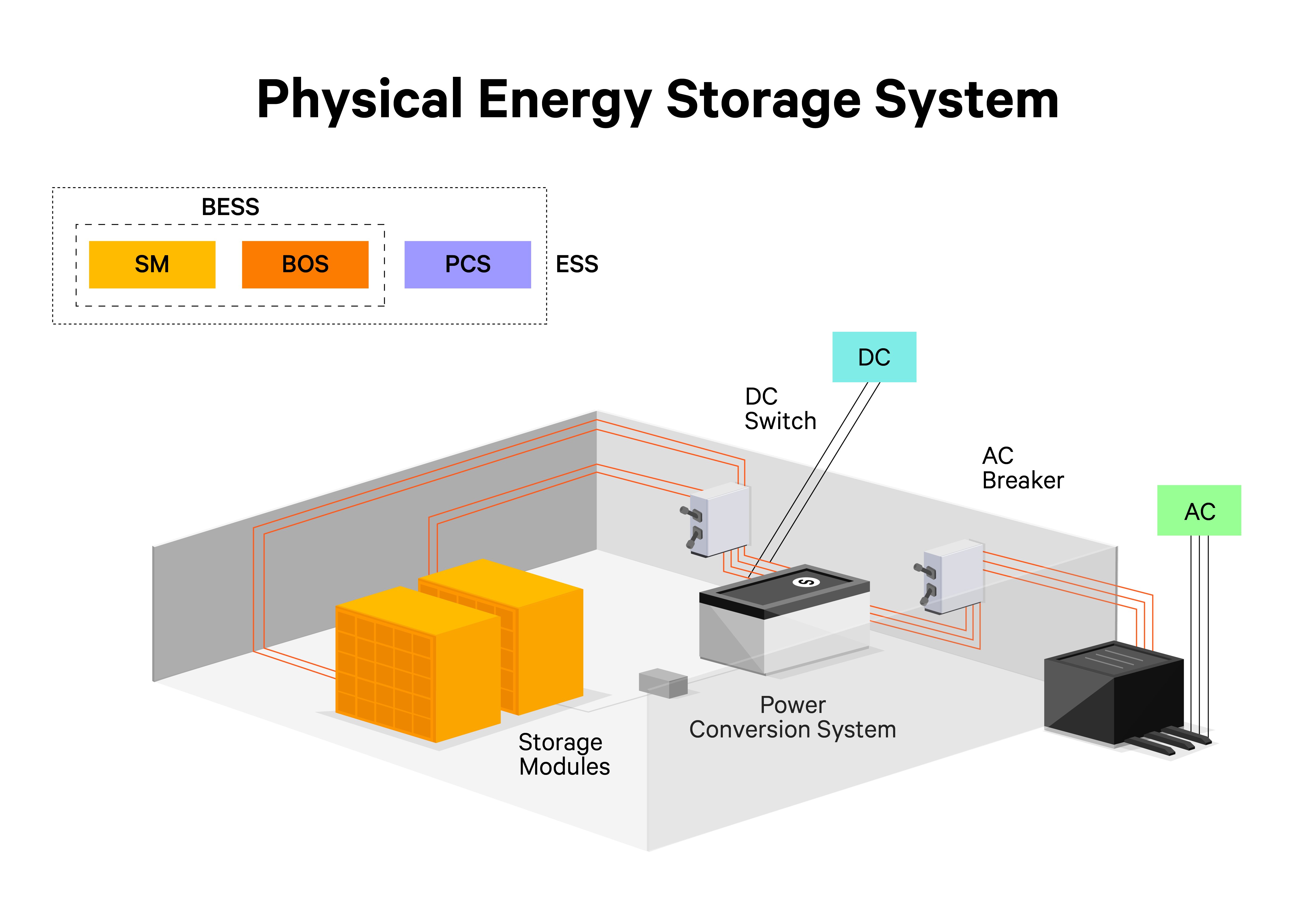
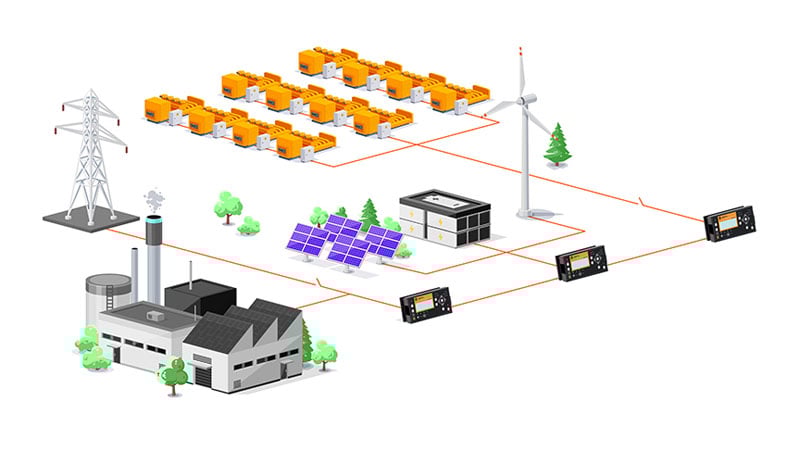
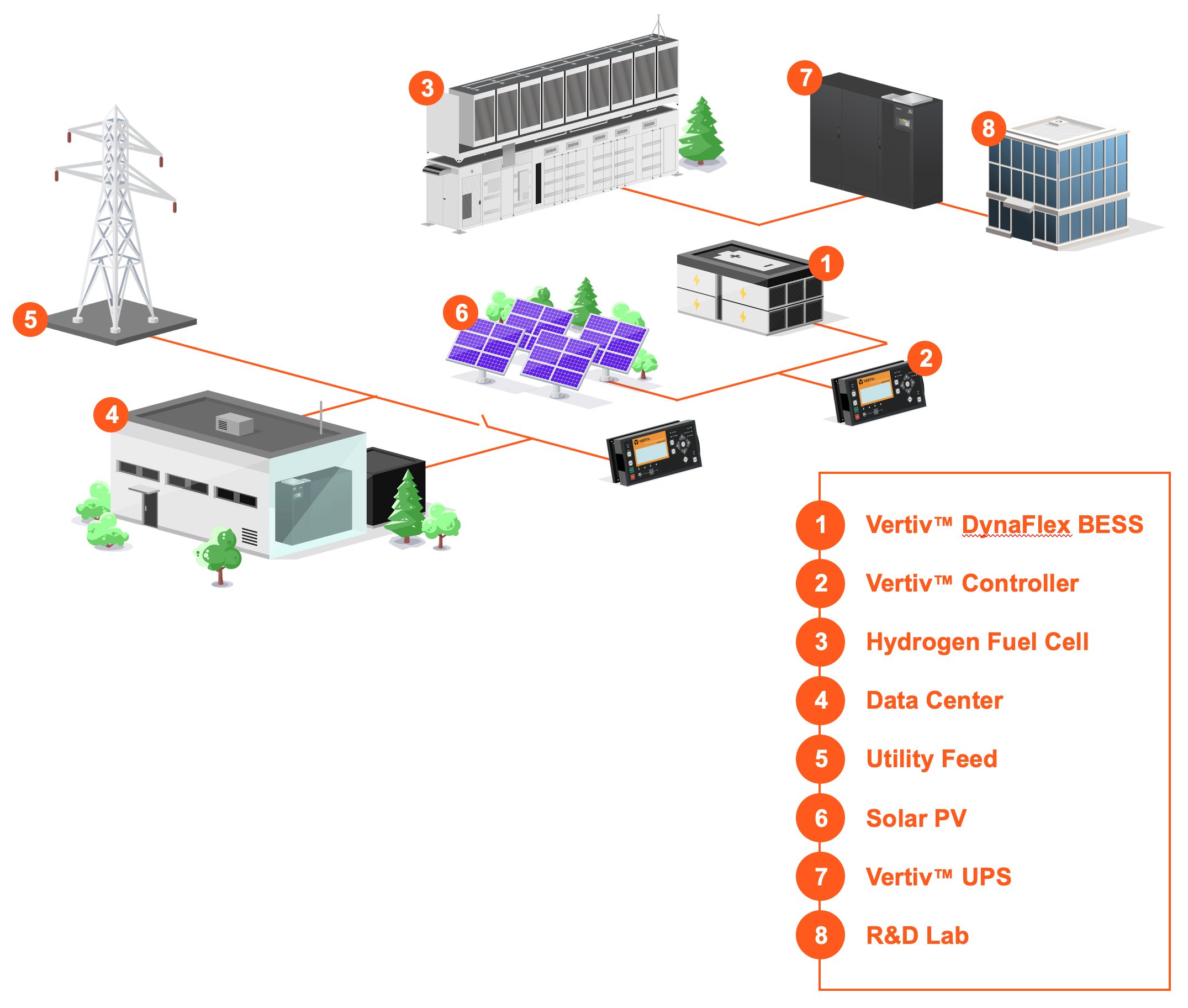
When including a BESS with a microgrid, the following grid services are possible

Voltage and Frequency Services
During the utility-connected mode of operation, a microgrid owner can utilize DERs to opt into paid service by the utility companies. This feature commands the system to assist the utility in maintaining localized grid power quality via a direct command control sequence that the controller will receive from the utility grid operator. It issues commands to one or all the DERs to respond to the requirement. Read more

Utility Demand Management
Depending on the selection of the DERs and their capability, along with the owner’s utility rate structure, a demand charge may be present that can be avoided by deft management of battery storage resources should it be part of the microgrid resources. This capability is expected to monitor and predict the client’s load and respond to daytime power consumption peaks by activating the battery’s output to avoid setting a high demand charge. This results in reduced utility costs. Read more

Time of Use Load Management
Although the microgrid controller is expected to manage the load during an islanding event, it can also do so while in grid connected mode. The controller can be configured to recommend and activate loads at various times of day when utility rates are favorable yet not overly impacting client operations. During the utility–connected mode of operation, a microgrid owner can utilize the always-on DERs in the grid to opt into paid service by the utility companies. This feature commands the system to assist the utility in maintaining localized grid power quality via a direct command control sequence that the controller will receive from the utility grid operator and issue commands to one or all of the DERs to respond to the requirement. Read more
BESS integration considerations
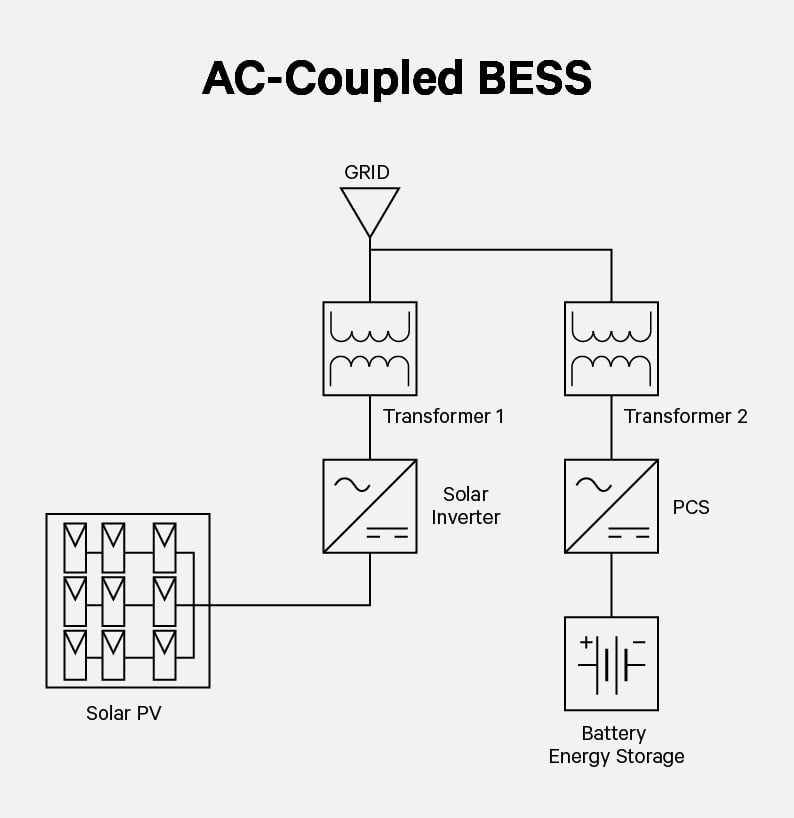
BESS utility interconnection
Integrating a BESS within the context of a microgrid with respect to the electrical utility is often like interconnecting other DER, such as generators and PV solar farms. The PCS used for the BESS will need to comply with the same standards as solar PV inverters (such as IEEE-1547-2018). The concern that the utility has, however, is possible reactive and/or short circuit power contributions the BESS could still present to the grid.
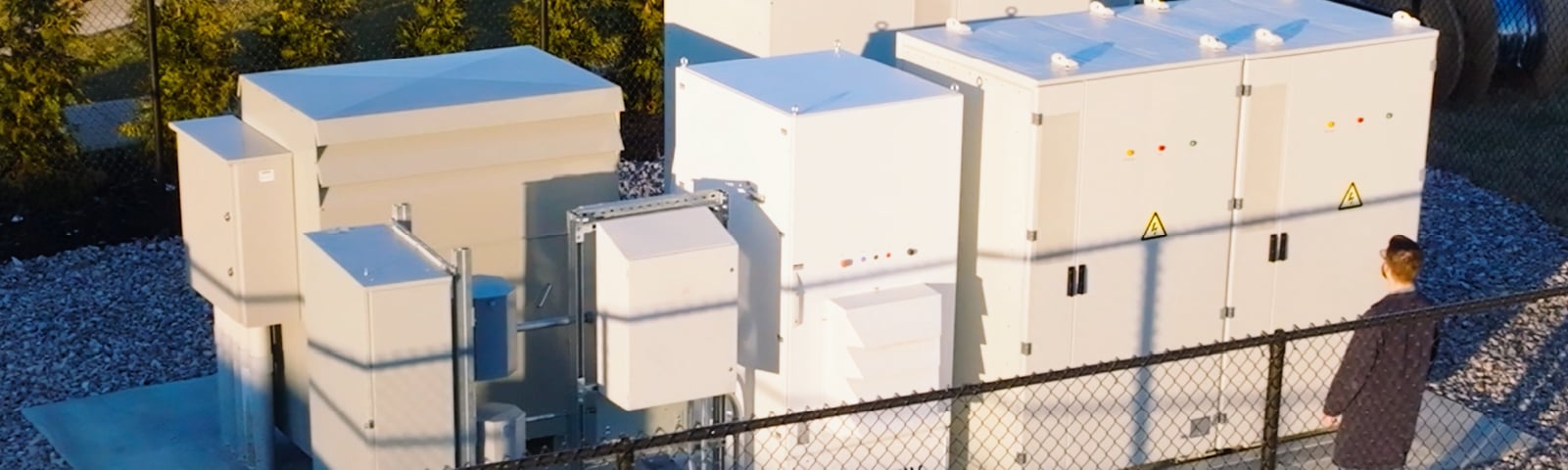
Vertiv™ EnergyCore grid - Battery energy storage system, integrated modular design
The Vertiv™ EnergyCore Grid - Battery Energy Storage System uses UL9540A lithium-ion batteries to provide utility-scale energy storage for mission-critical businesses that can be used as an always-on power supply. This energy storage can be used to smooth out power usage and seamlessly transition to an always-on battery-enabled power supply whenever needed. By doing so, organizations can reduce OpEx costs, such as peak demand charges, on an ongoing basis. They can also participate in energy arbitrage and other services, enhancing profitability.
Common applications include:
- Gaining flexible peaking capacity
- Regulating power voltage and frequency
- Integrating renewable energy sources
- Enabling new grid services
- Enhancing utility transmission and distribution reliability.
Learn more on our Vertiv™ EnergyCore Grid - Battery Energy Storage System product page
Talk to an expert
Please complete the form below and we'll get back to you as soon as possible.
Thank you! Your submission has been sent.