

Behind every high-performing infrastructure is expertise built over time. Five women in data center engineering reveal how experience across systems shapes the people behind modern facilities.
Data center infrastructure has never been more powerful—and more interconnected. Artificial intelligence (AI) workloads pushing racks beyond 140 kilowatts (kW) demand tighter integration across power, cooling, and controls. At these densities, every engineering decision influences system-wide performance.
Five women in data center engineering at Vertiv show how they solve these challenges. They translate certification standards into deployable designs, align cross-functional teams, coordinate global R&D execution, and balance high-density power tradeoffs. Their expertise comes from working at the intersection of disciplines, where real-world requirements shape engineering decisions and enable faster, more reliable outcomes.
“Raise your hand! Stepping into roles before you feel fully ready, can change your entire career.”
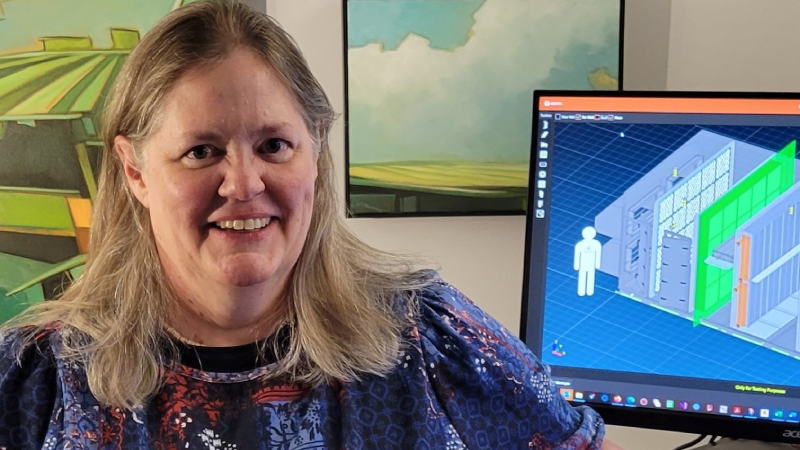
- Megan Arnold, Vertiv Senior Engineering Manager
Leading an engineering department requires solving team dynamics alongside technical challenges. Megan Arnold, Senior Engineering Manager, focuses on how engineers work, communicate, and collaborate because better coordination drives better outcomes. Earlier in her career, unexpected compressible-flow failures pushed rapid learning and cross-disciplinary problem-solving. That experience now shapes how she builds teams that adapt quickly and resolve issues before deployment.
“Engineering needs more women. Work hard, do your best, and remember, you're solving the same problems as everyone else in the room, regardless of who's at the table.”

- Jessica Slish, Vertiv Senior Compliance Engineer
Certification delays often arise when agencies and engineers interpret the same standard differently. Senior Compliance Engineer Jessica Slish works at that intersection, turning ambiguity into clarity without compromising technical rigor. Her work depends on understanding material choices, thermal constraints, and testing data well enough to explain the reasoning behind design decisions. By structuring complex discussions around evidence and clear interpretation, she helps teams move forward with confidence instead of uncertainty.
“Engineering is a profession built on doing — you have to go close to the frontline.”

- Jie Irene Sun, Vertiv Senior Manager for Engineering Management
Complex infrastructure projects face challenges when engineering, operations, procurement, and marketing work from different assumptions about feasibility. Senior Manager Jie Irene Sun resolves this by translating requirements across teams and aligning decisions around shared technical constraints. She builds consensus by understanding each function’s priorities and adjusting plans so work moves forward without unresolved issues. In AI infrastructure, where power and cooling systems operate together, this coordination helps teams deliver complete solutions without late redesigns.
“Never stop learning and expanding your understanding of both the work and the people you work with.”
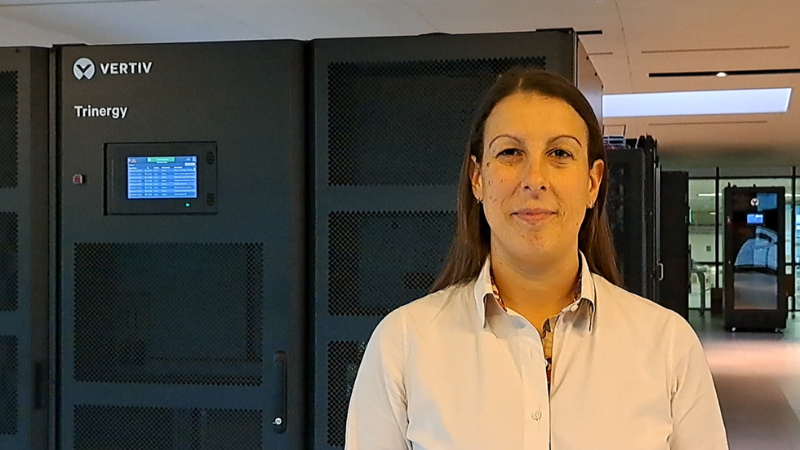
- Silvia Sinigardi, Vertiv Engineering Operations Director
Global R&D programs risk inconsistency when teams operate under different priorities and processes. Engineering Operations Director Silvia Sinigardi aligns standards and execution so products release quickly without sacrificing quality. Early product-transfer work showed her that outcomes depend on coordination across planning, procurement, manufacturing, and service, not design alone. Today, she applies that systems-level perspective to connect R&D centers across China, Bologna, India, and North America as AI-driven infrastructure accelerates development.
“Girls don’t need to do anything different. They just need to focus on their field and keep going.”
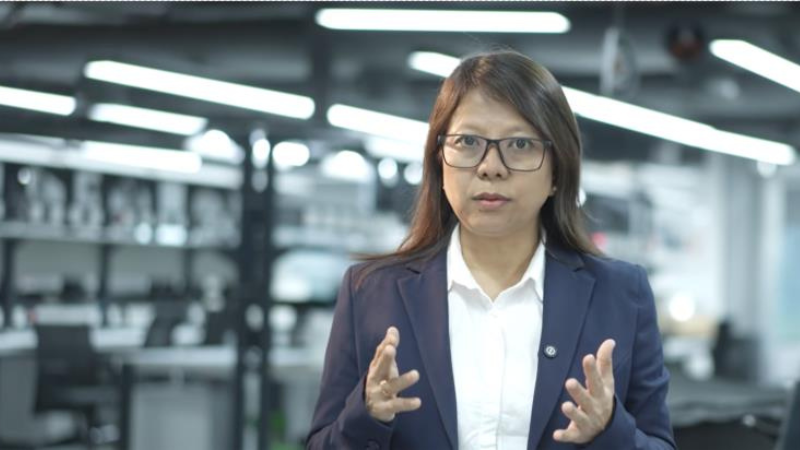
- Putli Sharma, Vertiv Director of Engineering (Modular Power Converters)
Designing power conversion and DC-to-DC solutions for high-density AI systems means balancing efficiency, footprint, thermal limits, and cost simultaneously. Director of Engineering for Modular Power Converters Putli Sharma leads a modular power team navigating those decisions daily. She guides engineers through tradeoffs where tools generate options, but judgment determines the solution. Strong fundamentals remain critical as simulation speeds increase alongside system complexity. Her focus is building engineers who understand the physics behind the models and deliver designs that perform reliably in deployment.
Where the work goes next
Modern infrastructure demands engineers who move comfortably between disciplines and turn complexity into execution. The leaders featured here show how technical expertise grows through real decisions, translating standards into action, aligning teams around constraints, and delivering systems that perform under pressure. Their work reflects a broader shift in engineering: progress now depends on people who connect domains, apply judgment in uncertain conditions, and bring diverse perspectives to solving shared challenges.
As AI-driven infrastructure advances, innovation will follow those who combine technical rigor with the ability to integrate, adapt, and deliver at scale.
Engineer the AI era
Visit the Vertiv™ AI Hub to see how AI-driven infrastructure is changing the work engineers do every day, from integrated system design to operating increasingly complex environments.