
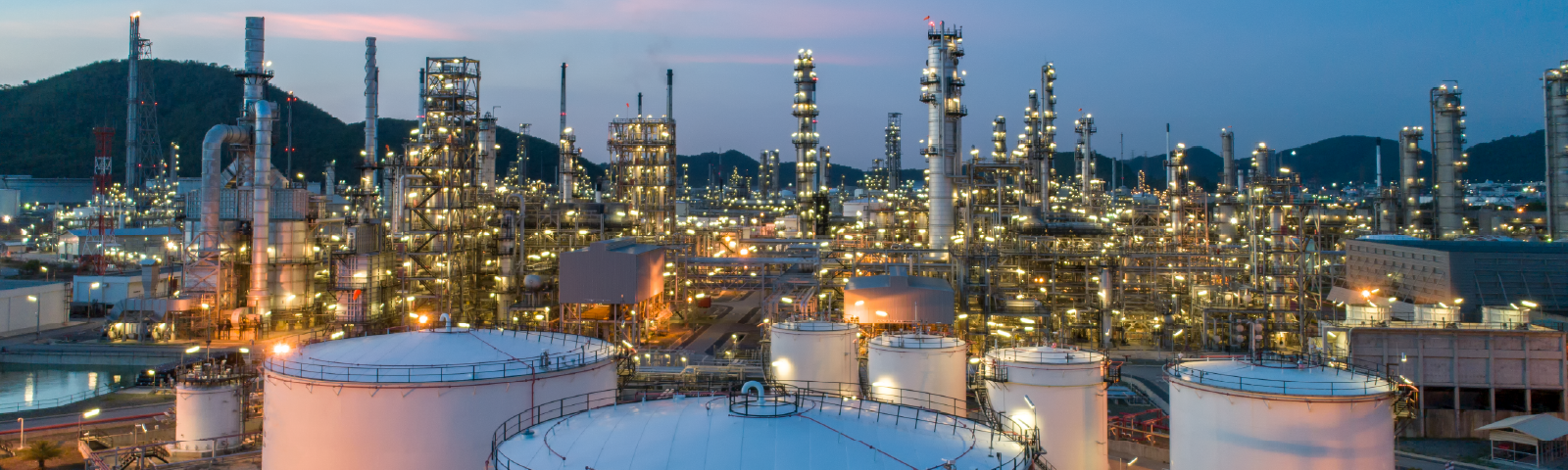
In automated industrial environments, power system design carries broader operational consequences as systems become more tightly integrated.
Automation and digitally enabled process controls are integrating across industrial operations. McKinsey reports that 94% of industrial automation users view digital solutions as critical to business performance. Connected systems are now embedded into core production processes, tying operational continuity directly to power availability. Even minor power disturbances can disrupt entire processes—halting automation and compromising operational stability beyond just productivity losses.
This dependence on automated and connected systems places new demands on how Uninterruptible Power Supply (UPS) solutions are selected. While UPS systems are used in both data centers and industrial facilities, the environments they protect differ fundamentally. Uptime Intelligence’s Annual Outage Analysis 2025 offers insight into how data centers are planned and operated as tightly controlled, highly standardized environments. Industrial settings, by contrast, function under less controlled conditions, with more variable electrical behavior and physical realities that influence UPS installation and maintenance. These differences call for a purpose-built approach to power protection for industrial applications.
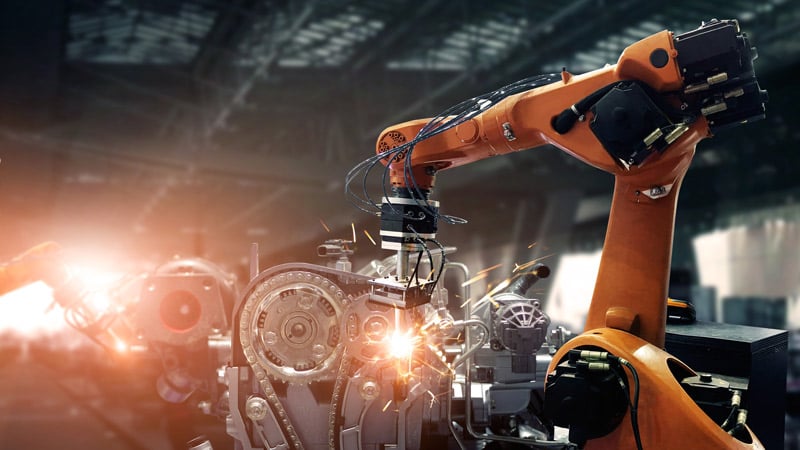
Industry focus: AI in manufacturing demands scalable systems and smarter infrastructure
Explore how AI, robotics, and industrial IoT are transforming modern manufacturing with smarter infrastructure, power, and cooling for the smart factory.
How industrial applications shape power protection requirements
Industrial production environments are becoming more complex in how equipment, control systems, and supporting infrastructure interact. Advanced automation and AI-driven capabilities are contributing to this shift, placing new expectations on UPS systems to deliver faster response and stable performance during rapid load changes. In practice, operating conditions, electrical behavior, and performance expectations shape how power protection is designed and applied across industrial applications.
- Environmental exposure: Industrial facilities often lack uniform temperature control, air cleanliness, and climate regulation found in data centers. Elevated ambient temperatures, airborne particulates, and inconsistent airflow place added stress on thermal performance and internal components, making enclosure protection and rugged system-level design non-negotiable.
- Electrical behavior: In industrial settings, power systems are expected to support a wide range of equipment operating under dynamic conditions. This results in electrical behavior that is less uniform than the steady IT loads typical of data center environments. UPS systems must absorb this variability while delivering stable, consistent power to critical loads.
- Operational expectations: Power disturbances don’t just affect uptime metrics. Power protection in industrial applications is expected to support interconnected control, automation, and process systems with predictable behavior, demanding reliability, electrical isolation, and consistent performance during power events.
UPS systems designed for these requirements, such as the Vertiv™ PowerUPS 6000 Industrial, embody how environmental, electrical, and operational considerations converge in practice.
Key considerations for industrial UPS selection
Capacity is a primary consideration when evaluating a UPS, but it is only part of the equation. True performance depends on how well the UPS aligns with operating conditions, electrical characteristics, and serviceability requirements. Here are some practical considerations that influence industrial UPS evaluation and selection:
- Reliable performance in harsh environments: Industrial electrical rooms have fluctuating temperatures, airborne dust, and airflow challenges. UPS systems selected for these environments are evaluated on enclosure Ingress Protection (IP), thermal tolerance, and internal design features that support continued operation under elevated ambient temperatures and particulate exposure. Solutions such as the Vertiv PowerUPS 6000, featuring an IP42 protection rating and operation up to 50 °C, are designed to align with typical industrial electrical room conditions.
- Power quality and electrical protection: Automation and control systems are highly sensitive to voltage disturbances and waveform distortion. UPS solutions in these settings are expected to manage harmonics, voltage variation, and electrical isolation to keep processes stable during power disturbances.
- Installation and maintenance: Electrical rooms are often constrained by fixed equipment layouts. UPS designs that allow front-access servicing and flexible cable entry help simplify installation and maintenance without disrupting production areas.
- Availability and scalability: Industrial power protection must adapt for growth whether through added automation, expanded production lines or increased redundancy. Systems should scale in a way that avoids costly infrastructure overhauls.
- Operational efficiency: In continuously operating facilities, UPS efficiency directly affects energy losses and the amount of heat generated over time. UPS designs are assessed based on efficiency under normal operating loads to help manage heat and support sustained operation within the electrical room.
Regulatory compliance, energy efficiency, and Industry 4.0 integration define power protection priorities across industrial sectors in EMEA. Adherence to EU directives, including Conformité Européenne (CE) marking and European Norms (EN) or International Electrotechnical Commission (IEC) standards, sets clear requirements on how UPS systems are specified and deployed. This reinforces the need for solutions that deliver efficient performance and integrate across both legacy and newer industrial facilities.
Future-ready industrial power
Industrial power requirements are being redefined by automation, digital control systems, and rising production complexity. Selecting UPS solutions that account for operating realities, electrical resilience and adaptability helps organizations stay ahead without costly infrastructure redesigns.
The Vertiv™ PowerUPS 6000 Industrial embodies this forward-looking approach by combining industrial-grade design, flexible configurations, and power quality engineered for demanding applications in a single platform. It supports today’s operational priorities while providing a clear path for adapting to broader industrial power requirements.