
Row-based manifolds enable efficient thermal management in next-generation data centers.
The limitations of traditional air cooling are becoming more apparent as data centers evolve to support increasingly dense and power-hungry workloads, particularly those driven by high-performance computing (HPC) such as artificial intelligence (AI) and hyperscale computing. Liquid cooling has emerged as a critical solution, offering superior thermal performance and energy efficiency. Within this paradigm, row-based manifolds are pivotal in enabling scalable, reliable, and maintainable liquid cooling deployments.
What are row-based manifolds?
Row-based manifolds are piping assemblies designed to distribute coolant—typically water, glycol mixtures, or dielectric fluids—from central coolant distribution units (CDUs) to individual server racks within a data center row. These manifolds form part of the secondary fluid network (SFN), also known as the technology cooling system (TCS), which bridges the gap between the CDU and the cold plates inside servers.
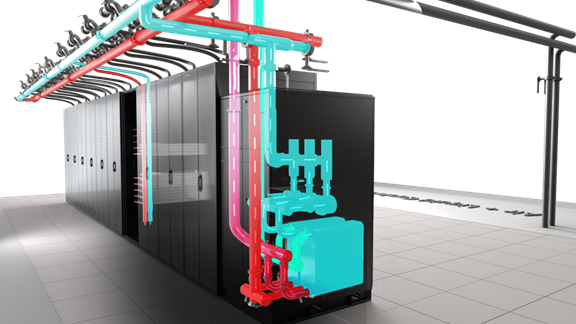
Figure 1. Row-based manifolds distribute coolant and form part of the secondary fluid network (SFN), bridging the gap between the coolant distribution units (CDUs) and cold plates inside the servers. Source: Vertiv
While cold plates extract heat directly from chips, row-based manifolds facilitate the coolant reaching these plates efficiently and uniformly across multiple racks. They are engineered to support direct-to-chip (DTC) or rear door heat exchanger (RDHx) cooling applications and can come in different designs with unique branch configurations, valve options, and pipe diameters.
Why are row-based manifolds necessary?
- Scalability and modularity: Modern data centers must scale quickly to meet demand. As a best practice, row manifolds can offer a modular design to account for differences in deployment configurations and site architectures. This allows operators to configure systems rapidly using standardized components. This modularity can also support both greenfield and brownfield deployments and accommodate overhead or underfloor installations.
- Performance and reliability: Row manifolds that are constructed from 304L stainless steel with sanitary tri-clamp fittings provide corrosion resistance and fluid cleanliness. These features are critical for maintaining the integrity of the cooling system and preventing contamination that could degrade performance or damage IT equipment.
- Speed of deployment: Prefabricated and pressure-tested assemblies can reduce installation time and complexity. With flush and fill services, manifolds arrive clean and ready for commissioning, minimizing downtime and accelerating operators' time-to-revenue.
- Customization and future-readiness: Hyperscale and colocation customers often require unique geometries and flow rates. Experienced vendors can work with data center operators for their specific requirements with SFN row manifolds and support engineered-to-order (ETO) configurations, enabling tailored solutions that meet current needs while allowing for future expansion.
The role of row-based manifolds in the whole liquid cooling system
To understand the importance of row manifolds, viewing them within the context of the entire thermal management ecosystem is essential.
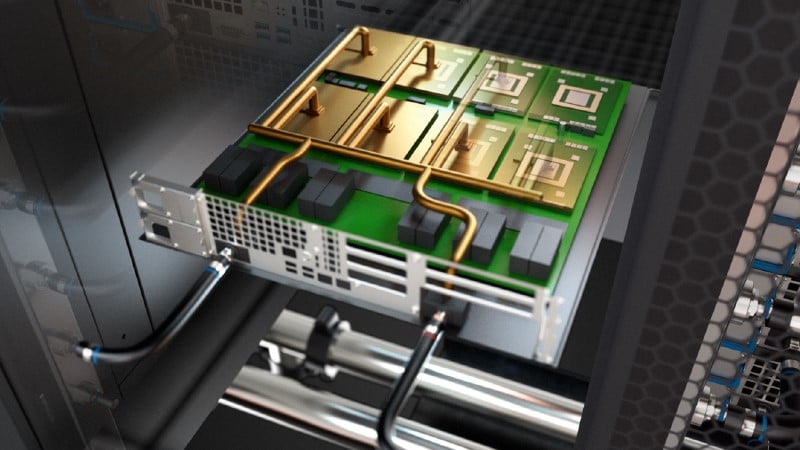
At the component level, cold plates are mounted directly onto central processing units (CPUs), graphics processing units (GPUs), and other high-performance processors. These plates absorb heat and transfer it to the circulating coolant, enabling efficient thermal management at the source. However, cold plates alone cannot function effectively without a resilient and well-orchestrated fluid distribution network.
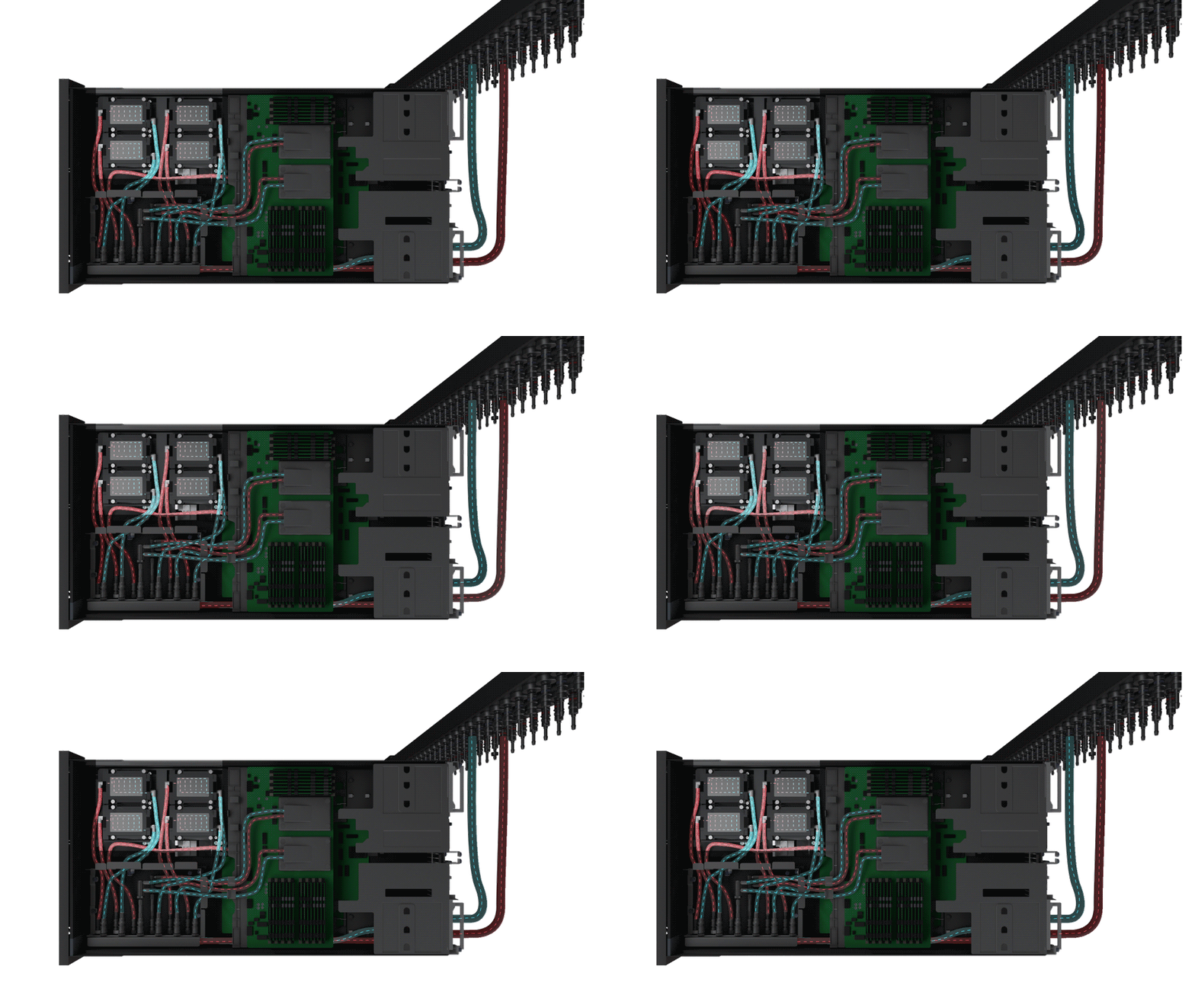
Figure 2. In liquid cooling, the coolant is circulated to remove the heat directly from the plate for efficient thermal management. Source: Vertiv
In-rack manifolds are the final distribution point within each server rack, channeling coolant from row manifolds to individual cold plates. These manifolds are compact and highly specialized, designed to interface directly with IT hardware and maintain precise coolant delivery.
Row-based manifolds sit between the CDUs and in-rack manifolds, managing coolant flow across multiple racks. Their primary function is maintaining consistent pressure and flow rates throughout the system. Row manifolds offer granular control over fluid dynamics and are equipped with configurable valve options. These valves enable system balancing, adaptive flow regulation, and automated isolation, critical for maintaining operational stability in high-density environments.
CDUs are the heart of the liquid cooling system. They regulate coolant temperature, pressure, and flow and include heat exchangers that transfer heat to the facility water system (FWS), a refrigerant loop, or ambient air—depending on the CDU type. Row manifolds are engineered to integrate seamlessly with CDUs, enabling scalable deployments and modular expansion.
Even in liquid-cooled environments, perimeter air cooling remains essential. Computer room air handler (CRAH) or computer room air conditioner (CRAC) units assist in removing residual heat from components not directly liquid-cooled (such as power supplies and storage devices) and manage humidity levels to prevent condensation. In high-density deployments, perimeter cooling keeps the ambient environment within safe operating thresholds, complementing the precision of liquid cooling.
Beyond the data hall, chillers, trim coolers, and other heat rejection systems remove heat from the primary cooling loop. Whether employing direct expansion or chilled water, these units are vital to maintaining the overall thermal efficiency of the facility.
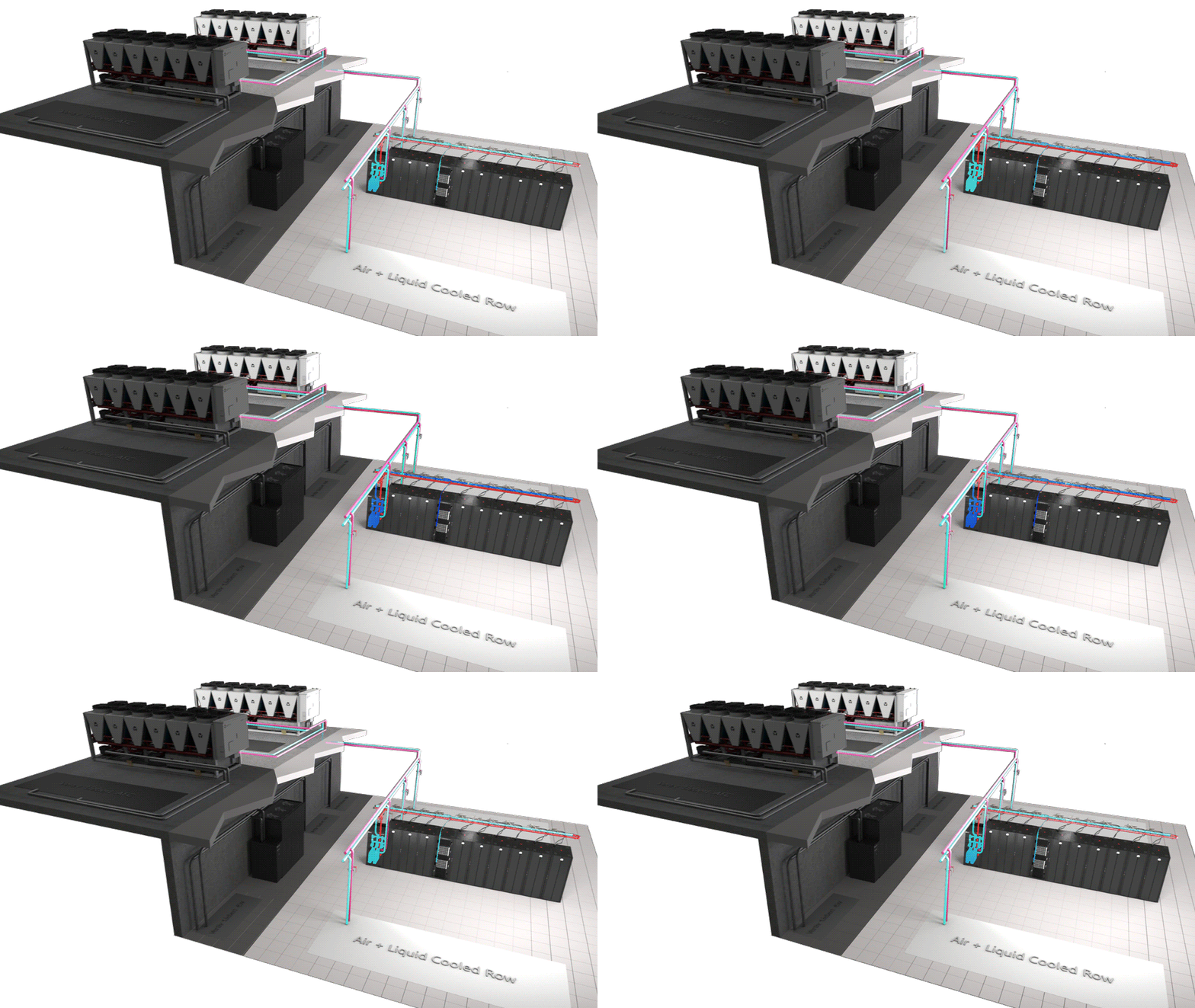
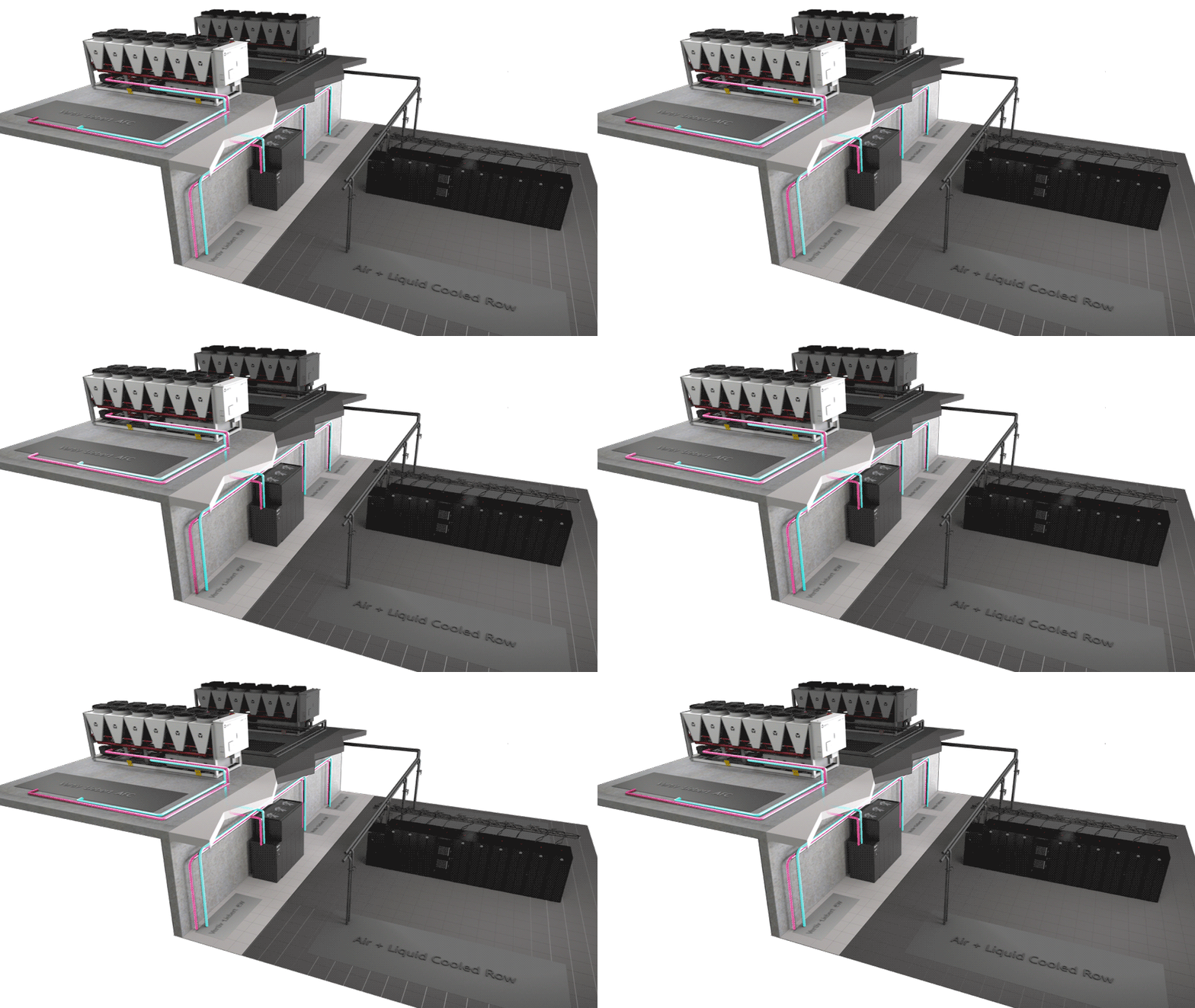
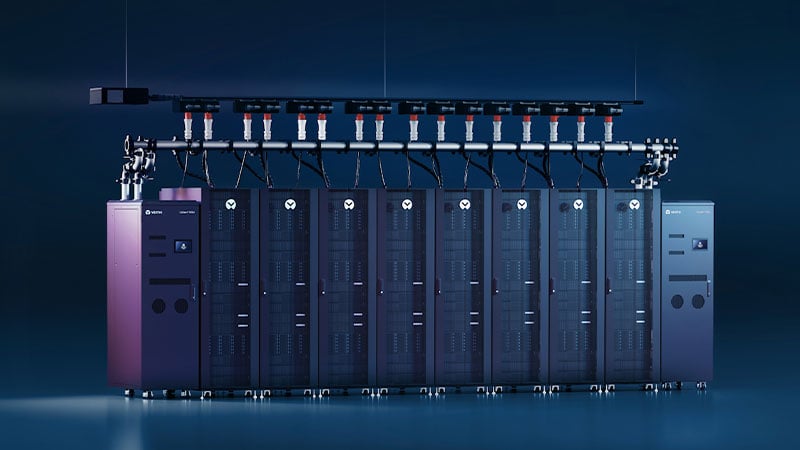
Figure 3. Row-based manifolds manage coolant flow across multiple racks, sitting between CDUs and in-rack manifolds (top). Working together, perimeter cooling and other heat rejection systems assist in removing residual heat and manage humidity in the facility (bottom). Source: Vertiv
The entire system is orchestrated by intelligent control platforms that aggregate data from sensors across the cooling network. These platforms enable predictive maintenance, automated alerts, and real-time optimization. As key nodes in this network, row manifolds contribute significantly to system intelligence and resilience as modern designs are integrated with advanced control systems. IoT-enabled sensors embedded within the manifolds monitor temperature, pressure, and flow rate in real time. Leak detection is a key feature, with moisture sensors and pressure differential monitoring designed to identify and isolate leaks before they escalate. This proactive approach to fault detection minimizes risk to equipment and keeps operations uninterrupted.
Conclusion
As data centers continue to push compute density and energy efficiency boundaries, liquid cooling is proving essential. Row-based manifolds are a critical enabler of this transition, providing the infrastructure to distribute coolant reliably and efficiently across high-performance environments. Designing the design center as an integrated system offers additional long-term benefits to operational efficiency and longevity compared to sourcing independent components from disparate vendors. Whether supporting a hyperscale deployment or a compact edge facility, these manifolds deliver the performance and flexibility required to meet the demands of the next generation’s data centers.