
Power and thermal systems are converging into integrated infrastructure built to handle the scale, speed, and complexity of AI deployments in high-density data centers.
The growing complexity of high-density deployments is exposing the limitations of fragmented infrastructure. According to IDC, global spending on AI hardware is projected to reach $258 billion by 2028. (See Figure 1) Data center energy efficiency is also in focus, with energy consumption expected to more than double by that same year. These shifts are accelerating the need for infrastructure models that can support high-density, fast-paced deployments at scale.
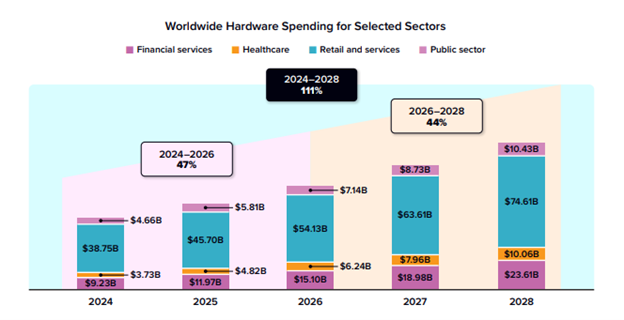
Figure 1. Worldwide AI hardware spending is projected to grow 111% from 2024 to 2028 across key sectors. Source: IDC, 2025
Operators are now navigating a landscape defined by rising rack power requirements, dynamic workloads, and compressed timelines for deployments. Yet data center power and cooling systems are often still managed as separate functions handled by different teams, tools, and vendors. This separation introduces friction at a time when speed, consistency, and coordination are becoming operational priorities.
In response to this complexity, the relationship between power and thermal infrastructure is changing. Unifying these systems helps reduce on-site configuration efforts, minimize deployment risks, and support consistent operations across locations. With a single software platform, teams can manage power and thermal systems the same way at every site.
The hidden costs of fragmentation
In high-density, fast-paced environments, managing separate power and thermal systems adds layers of complexity that can slow progress before the site is even online. (See Figure 2) During the build phase, siloed systems often require separate vendors, engineering teams, and integration timelines. Each platform comes with its own logic, interface, and commissioning requirements. This leads to longer deployment cycles, more touchpoints to coordinate, and higher potential for misalignment between subsystems. These factors create friction in a process that increasingly demands speed and repeatability.
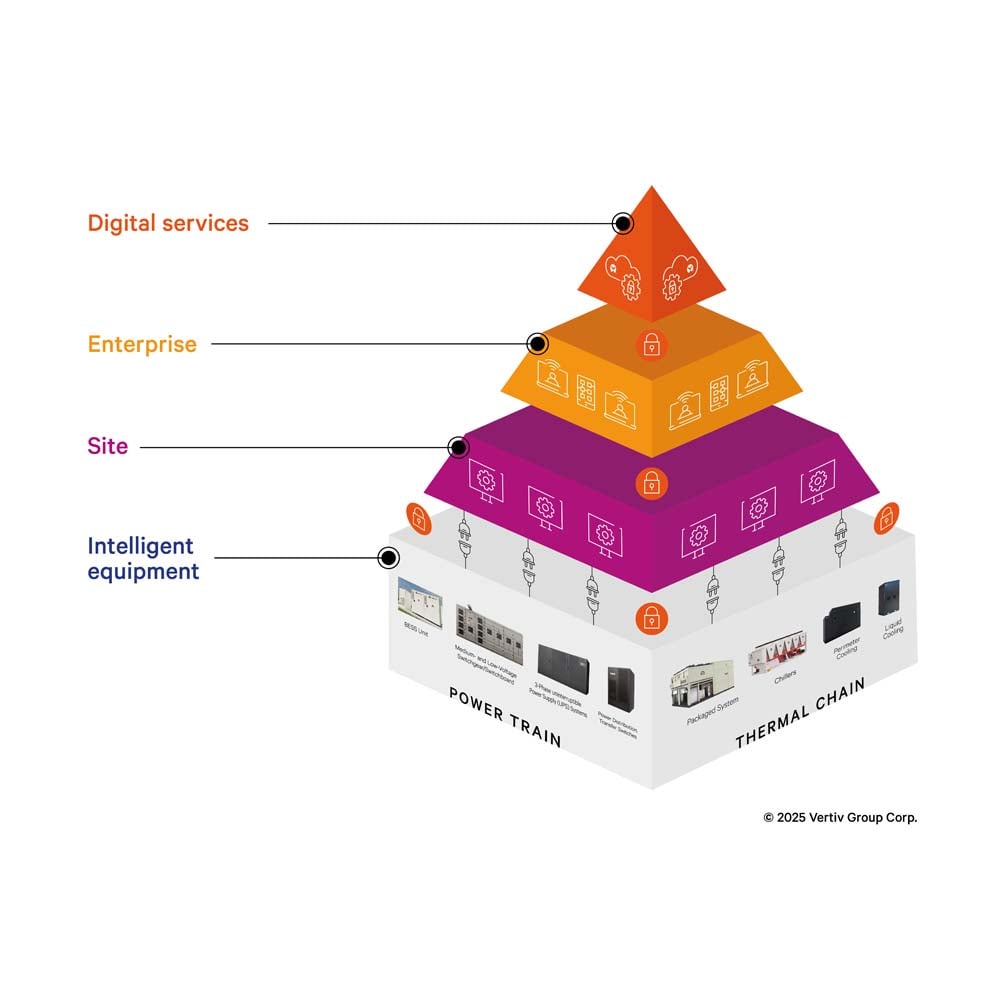
Figure 2. Vertiv™ Unify supports consistent power and thermal management across equipment, site and enterprise levels.
Once operational, these disconnects persist. Site teams are left to navigate multiple tools to monitor and respond to performance issues, each with its own data structure, alarm logic, and update cadence. This can result to slower response times, inconsistent workflows, and greater dependency on manual oversight. Over time, fragmentation makes it harder to scale efficiently, maintain visibility across locations, or replicate success from one site to the next.
Power and cooling, reimagined as one
Accelerated computing and AI workloads are driving power and thermal infrastructure to operate as a holistic unit. According to IDC, workloads are already driving densities above 100 kW per rack, with some deployments projected to reach or exceed 1 MW by the end of this decade. (See Figure 3)
In such conditions, managing power and cooling independently introduces complexity operators can no longer afford.
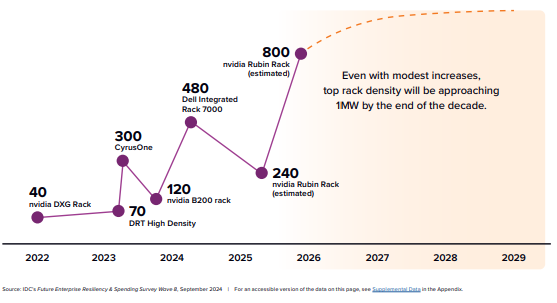
Figure 3. Rack density projections highlight the growth in AI infrastructure, with rack densities approaching 1 MW by 2030. Source: IDC, 2025
Integrated power and thermal infrastructure reduce the complexity of site-specific integrations, vendor dependencies, and manual configurations. Predefined logic built into software lets teams standardize how equipment health, energy usage, and environmental conditions are managed across sites. Open protocols simplify connections with multiple equipment vendors. When software and hardware are integrated directly at the factory level, it enables faster rollout through plug-and-play systems that streamline on-site work. This shortens commissioning time and speeds up site activation.
Operationally, convergence simplifies monitoring and speeds up troubleshooting. Teams gain clearer visibility with consolidated data, consistent alarms, and fewer manual steps. Issues are detected faster. Decision-making becomes simpler. Operators can manage infrastructure confidently across sites, improving reliability and efficiency.
Moving towards adaptable infrastructure
As AI becomes more deeply embedded into business operations, data centers must shift from reactive environments into dynamic systems that can adjust to changing conditions with greater speed and precision. The industry is beginning to recognize that more than just scaling up, adaptability also entails streamlining complexity so systems can scale smarter and respond faster.
This shift is accelerating the move toward unified infrastructure, where power and thermal systems are managed through a single control platform. IDC reports that 80% of senior tech leaders now view power and cooling as central to their AI strategies. Yet most data centers were not designed for the speed or volatility of AI workloads.
Meeting these demands takes more than new hardware. It requires integrated systems that simplify engineering, speed up deployment, and adapt without constant redesign. With centralized control, operators can scale modular capacity, manage energy fluctuations, and adopt liquid cooling and advanced power systems more easily.
Simplify power and thermal management at every level
Power and cooling are no longer parallel tracks. They are now part of a broader shift toward integrated infrastructure built for speed, scalability, and control. Download the full brochure to explore how an integrated thermal and power system supports next-generation data center strategies.